

Lab Diamond vs Moissanite Which Should You Choose?
When you're trying to decide between a lab diamond and moissanite, it really boils down to what they're made of and how they look. At their core, they're completely different materials. A lab diamond is pure carbon, exactly the same stuff as a natural diamond, just made in a controlled environment. Moissanite, on the other hand, is silicon carbide—a beautiful and unique gemstone in its own right, known for its incredible, fiery sparkle.
A Quick Comparison
Picking one over the other often comes down to personal taste. Are you looking for a classic, brilliant sparkle or a fiery, rainbow flash? How important is the budget? Both are fantastic, ethically-produced choices compared to mined diamonds, but they deliver very different visual experiences.
This infographic lays out the key differences in durability, brilliance, and cost to give you a quick snapshot.
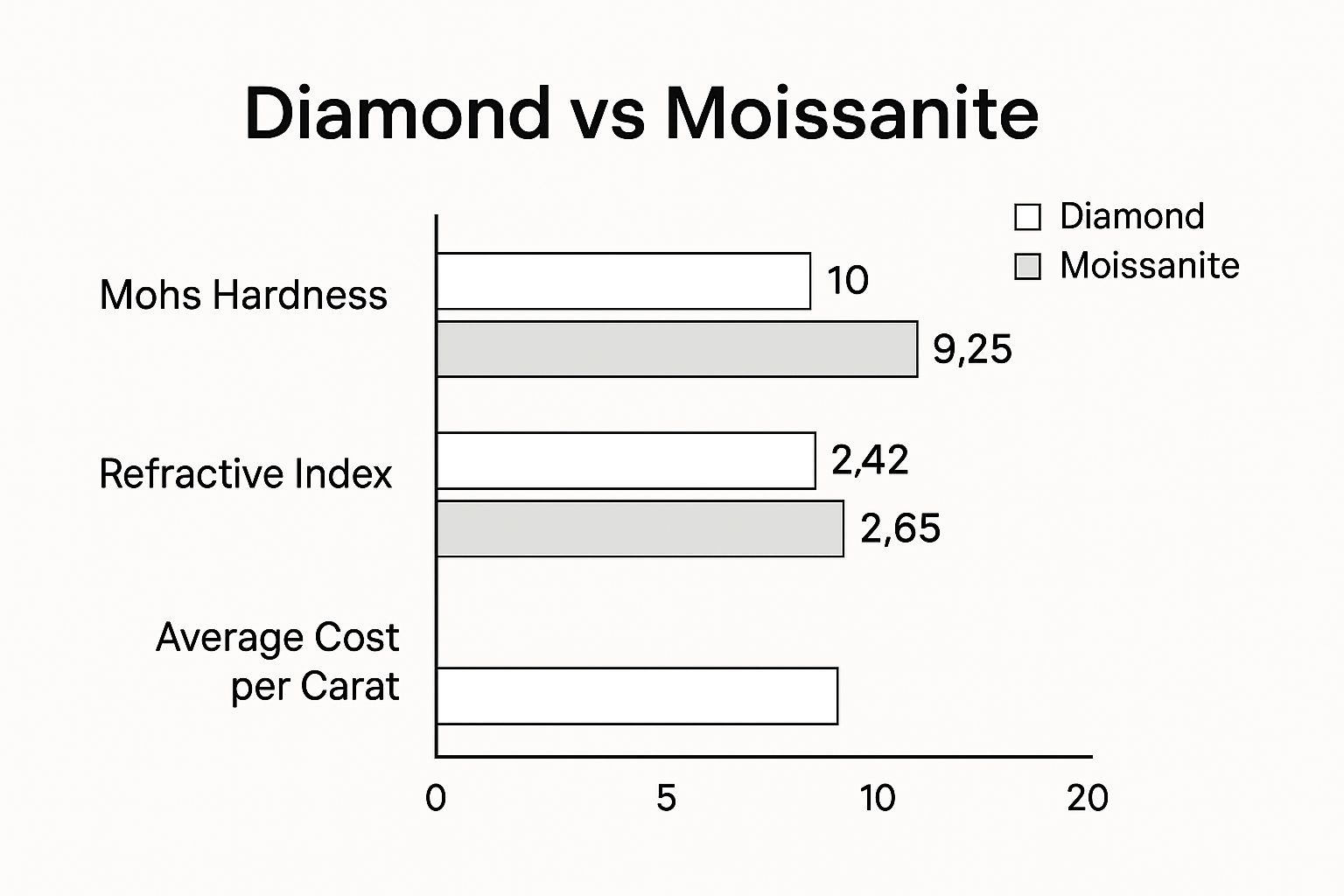
As you can see, a lab diamond scores a perfect 10 on the hardness scale, while moissanite isn't far behind. But where moissanite really stands out is its refractive index, which creates that famous intense, rainbow-like fire. It's no wonder lab-grown diamonds, being chemically identical to mined ones, are taking off. Their market share is projected to jump from 14.3% in 2023 to 21% by 2025, a clear sign that buyers are embracing this modern alternative.
To make things even clearer, here’s a simple table that puts their main characteristics side-by-side.
Key Differences At a Glance
This table gives you a straightforward look at how these two popular gemstones stack up against each other on the most important factors.
| Characteristic | Lab Diamond | Moissanite |
|---|---|---|
| Composition | Pure Carbon (C) | Silicon Carbide (SiC) |
| Brilliance | Intense, crisp white light | Fiery, rainbow-colored sparkle |
| Hardness (Mohs) | 10 (Hardest known mineral) | 9.25 (Extremely durable) |
| Price | More affordable than mined | Significantly less expensive |
At the end of the day, both stones offer incredible beauty that will last a lifetime. The right choice is simply the one that best fits your personal style and priorities.
If you're curious to learn more about how lab-grown diamonds stack up against their natural counterparts, you can explore our in-depth guide comparing lab vs. mined diamonds.
Understanding Brilliance, Fire, and Sparkle
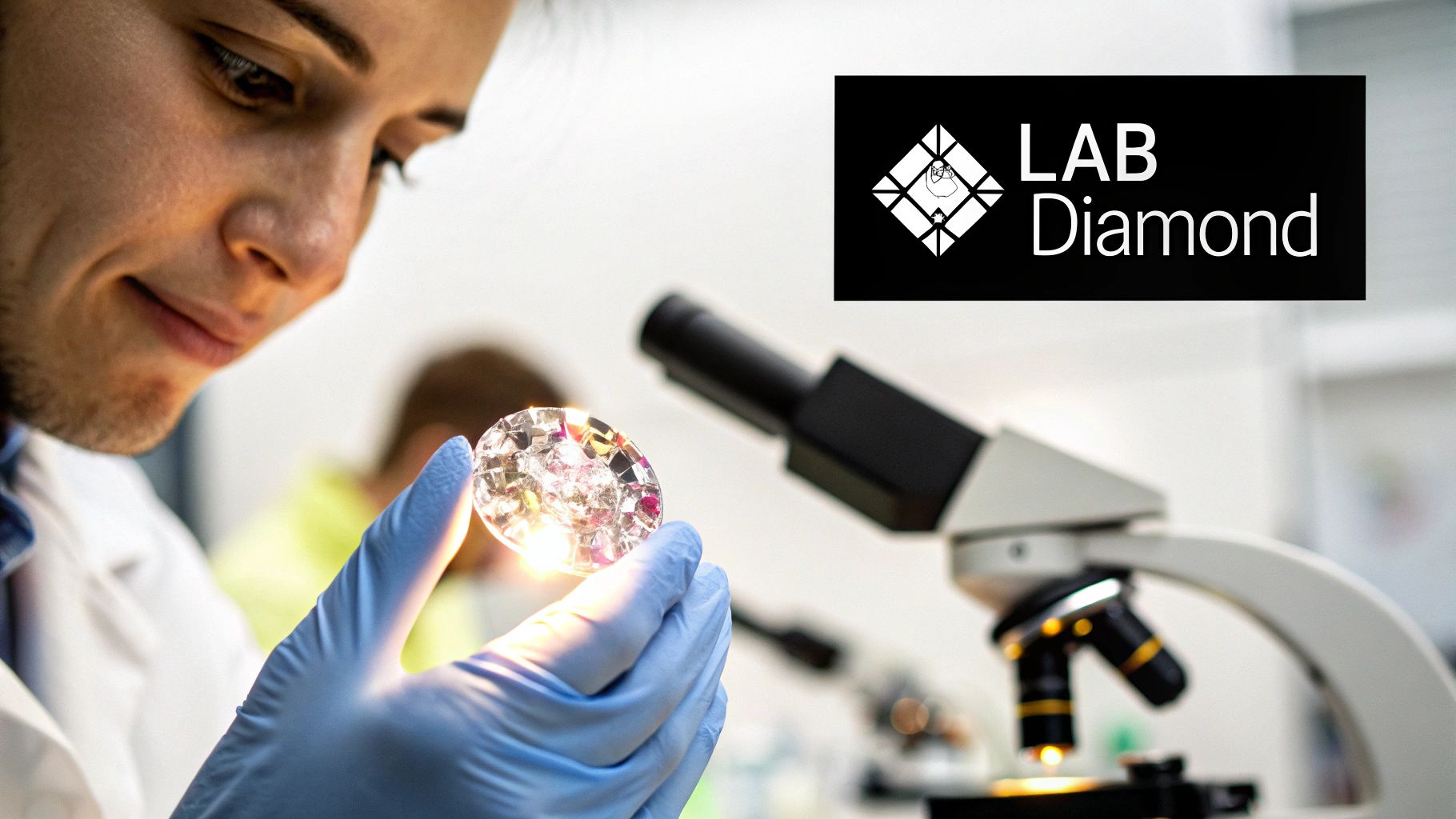
When we talk about a gemstone's beauty, we're really talking about how it plays with light. This interaction is what gives us brilliance, which is the bright white light it reflects, and fire, those beautiful flashes of rainbow color. Every stone has its own optical personality, and this is where lab diamonds and moissanite really start to show their differences.
Lab diamonds are known for their classic, balanced sparkle. They throw back a ton of white light, creating a look that’s both crisp and sophisticated. While they absolutely have that colorful fire, it's more of a subtle accent to their powerful brilliance.
Moissanite, on the other hand, is a true firecracker. Its claim to fame is its incredible fire. Because of its higher refractive index, moissanite bends light more aggressively, resulting in a dazzling, rainbow-like sparkle. People often describe it as the "disco-ball" effect, and for good reason!
How They Look in Different Light
You'll really notice the difference when you see these stones in various lighting situations.
- Lab Diamonds look stunning in natural daylight. They offer a more understated, timeless shimmer that stays consistently bright and elegant.
- Moissanite puts on its best show under direct sunlight or spotlights. This is where its fiery flashes become incredibly vibrant and impossible to miss.
Ultimately, the choice comes down to your personal taste. Are you drawn to the classic, icy brilliance of a diamond, or do you love the vibrant, colorful light show of a moissanite?
The best way to know for sure is to see them for yourself in Molenia’s collection. And once you've found the one you love, keeping it sparkling is everything. We've got you covered with our guide on how to care for moissanite jewelry.
Comparing Durability for Everyday Wear
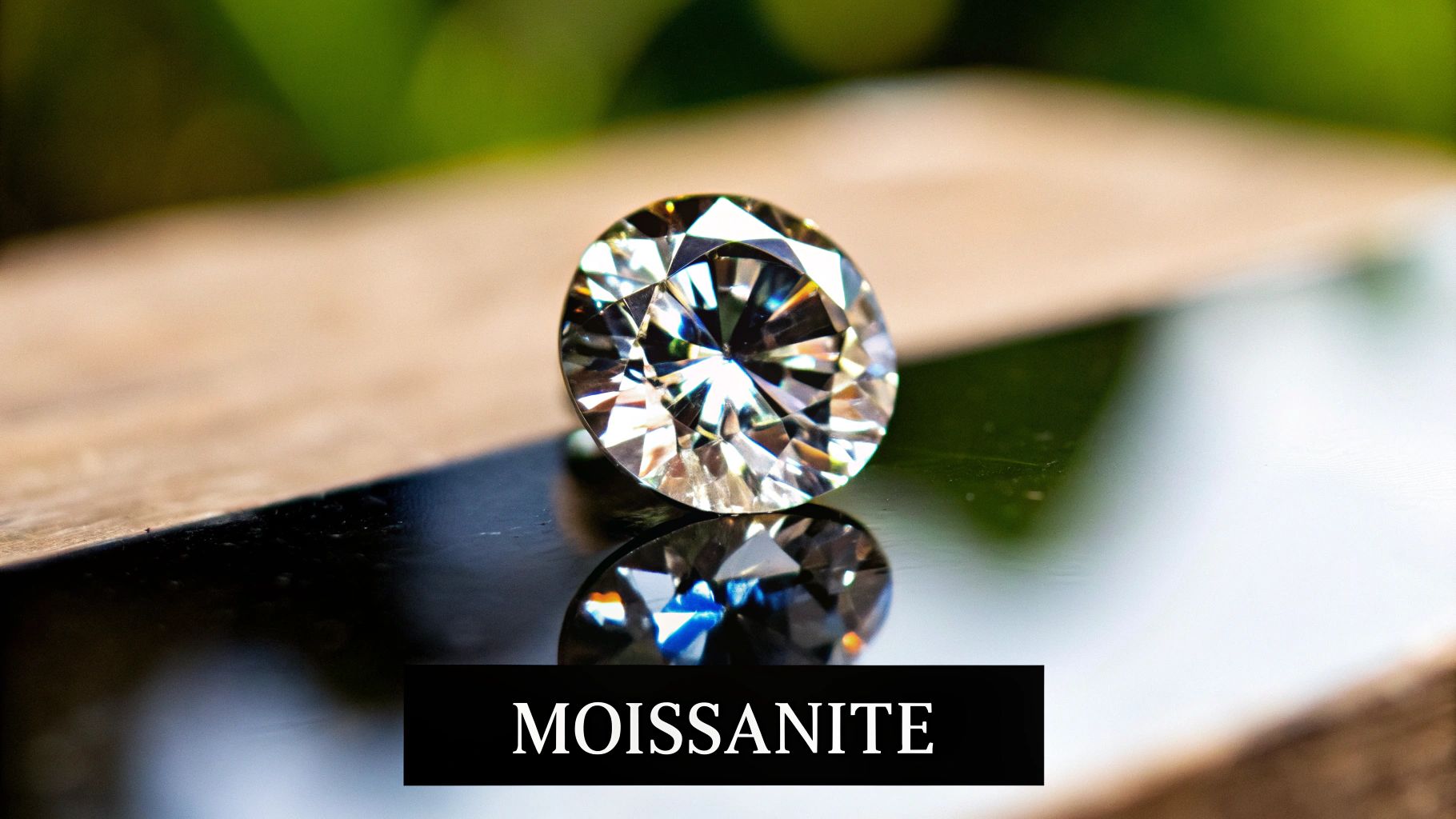
When you’re choosing a stone for something you'll wear every day, like an engagement ring, its toughness is a huge deal. You need something that can handle real life. Looking at lab diamond vs moissanite, you’ll be happy to know that both are incredibly resilient and built for the long haul.
The go-to test for gemstone hardness is the Mohs scale, which ranks minerals from 1 to 10. A lab-grown diamond sits at a perfect 10, making it the hardest mineral known. This exceptional hardness means it’s incredibly difficult to scratch and will keep its brilliant polish for a lifetime.
How Moissanite Measures Up
So, where does moissanite land? It comes in at a very impressive 9.25 on the Mohs scale. This makes it one of the toughest substances you'll find in jewelry—even harder than stones like sapphire and ruby.
For all practical purposes, a moissanite is more than tough enough for daily wear. It's not going to scratch or chip from the bumps and scrapes of a normal day.
The bottom line is that both lab diamonds and moissanite are fantastic choices for forever jewelry. Their high scores on the Mohs scale mean you can wear them confidently without worrying about everyday scratches.
While a lab diamond is technically the harder of the two, moissanite offers outstanding durability for any piece of fine jewelry. If you're still curious about the key differences between these two, you can dig deeper in our article that asks, is a moissanite a real diamond?
A Practical Guide to Cost and Value
When you put a lab diamond and a moissanite side-by-side, the most immediate and striking difference you’ll notice is the price tag. For most people, budget is a huge part of the decision, and this is where the two stones really go their separate ways. Moissanite is significantly more affordable, which often means you can get a much larger, more impressive stone for the same amount of money you'd spend on a smaller lab diamond.
This cost-saving aspect is hard to ignore. Moissanite, a gorgeous gem made from silicon carbide, offers a pretty unique bang for your buck. The global market for moissanite was valued at around USD 48.9 million in 2024 and is set to keep growing. This trend is fueled almost entirely by its affordability—it usually costs about one-tenth the price of a mined diamond. You can dive deeper into the growing moissanite market and its benefits here.
Aligning Your Purchase with Your Goals
It's easy to get caught up in thinking about long-term value, but it's a bit different here. Neither lab diamonds nor moissanite are investments in the way people once thought of mined diamonds (which themselves aren't a sure bet). The real "value" is what you're getting for your money today.
-
For the Diamond Purist: If you love the idea of a diamond—its pure carbon makeup and that classic, elegant sparkle—but want a more accessible price, a lab diamond is the perfect fit.
-
For the Sparkle Maximizer: If your main goal is to get the biggest, most fiery gem your budget allows, moissanite delivers incredible value without question.
The choice really boils down to what matters most to you. Are you drawn to the legacy and chemical purity of a diamond, or do you want to maximize the size and brilliance of your stone?
In the end, both are fantastic options that offer lasting beauty and strength, making them smart additions to any jewelry collection, like the beautiful pieces you can find at Molenia.
Where Your Gem Comes From: Ethics and Environmental Impact
For so many of us today, knowing where a gemstone comes from matters just as much as how it looks. This is where both lab-grown diamonds and moissanite really stand out, offering a clean, modern alternative to mined diamonds.
Because they are grown in controlled, high-tech labs, they completely avoid the environmental damage and ethical problems that can be tied to traditional mining.
When you choose a lab diamond or moissanite, you’re not just getting a beautiful stone. You're also getting peace of mind. There are no concerns about conflict mining, land degradation, or unfair labor conditions. It’s a choice that directly supports a more responsible and humane jewelry industry.
Opting for a lab-created stone means your conscience is as clear as your gem. You get all the beauty without the heavy environmental or ethical baggage that can come with mined stones, perfectly aligning your values with your style.
Both lab diamonds and moissanite give you a beautiful way to celebrate a special moment without compromising your principles. Getting to know these gems a little better can help you feel even more confident in your choice. For a deeper dive, our guide on what moissanite is explains its unique creation process and ethical perks.
How to Choose the Right Stone for You
https://www.youtube.com/embed/PcNmqKPKGVA
Picking between a lab diamond and a moissanite really boils down to what you're looking for in a forever stone. It’s less about which one is "better" and more about which one is better for you. Let's set aside the technical specs for a moment and focus on what truly matters: your budget, your personal style, and what you want your ring to say.
Ultimately, the choice often comes down to a simple preference: are you drawn to classic, timeless sparkle or a brilliant, fiery flash?
Scenarios to Guide Your Choice
To help you figure that out, let's walk through a couple of common situations. See which one sounds more like you.
-
You're after tradition and classic elegance. If you love the idea of a diamond—its history, its pure carbon structure, its iconic status—but want a more ethical and budget-friendly option, the lab diamond is your answer. It gives you that crisp, clean, white light that people have associated with engagement rings for centuries.
-
You want the most sparkle for your money. If your main goal is to get a big, dazzling stone that lights up a room, moissanite is the hands-down winner. Its incredible fire creates a vibrant "disco-ball" effect with flashes of rainbow color that is impossible to miss.
Your perfect stone is the one that mirrors your personality. A lab diamond speaks to understated, classic elegance, while a moissanite makes a bold, fiery statement.
At the end of the day, you can't go wrong. Both are gorgeous, durable, and responsibly-sourced choices you can feel great about wearing. And once you’ve picked your center stone, you can think about the rest of your look. For more on that, check out our guide on how to choose the right wedding jewelry.
Got Questions? We've Got Answers.
When you're weighing the options between a lab diamond and moissanite, a few questions always seem to pop up. Let's tackle the most common ones so you can feel completely confident in your final decision.
Can a Jeweler Spot the Difference?
Honestly, just by looking at it? It's tough. Even a seasoned jeweler would have a hard time telling them apart without the right equipment. The standard diamond tester you might see at a shop, which checks for heat conductivity, can be fooled because both stones handle heat in a similar way.
To get a definitive answer, a jeweler needs a more specialized tool—one that measures electrical conductivity. That's the real test that separates the two.
So, is Moissanite Just a "Fake" Diamond?
Absolutely not. Calling moissanite a "fake" diamond is like calling a sapphire a "fake" ruby. It’s a completely distinct and genuine gemstone with its own unique chemical makeup—it's made of silicon carbide.
While it shares that beautiful, classic look we love in a diamond, its incredible fire and sparkle are all its own. It's a real gem, through and through.
Ready to find the perfect piece that reflects your style and values? Explore the stunning, ethically sourced collection at Molenia Jewelry and discover the brilliance of modern craftsmanship. Visit Molenia Jewelry to find your forever piece today.


