

Why Flat Back Earrings Are the Best Choice for Sensitive Ears
Let's be honest: traditional earrings can be a real pain. We've all dealt with that annoying poke behind the ear, the snag on a sweater, or the irritation after a long day. If you've ever wished for an earring that looks great without the discomfort, you're not alone. The answer is flat back earrings, and they're a total game-changer for anyone with sensitive ears.
Finally, Earrings You Can Actually Forget You're Wearing

The magic is in the combination of a smart, poke-free design and high-quality materials that won't irritate your skin.
Flat back earrings are a game-changer for daily wear, especially for side sleepers, headphone users, and anyone with sensitive skin who thought comfortable earrings were impossible.
That’s why materials like hypoallergenic 925 sterling silver jewelry and brilliant, durable stones like moissanite are the gold standard here. Brands such as Molenia have really nailed this, creating beautiful, modern designs that are genuinely comfortable enough for 24/7 wear. It's the perfect way to upgrade your style without sacrificing comfort.
How Do Flat Back Earrings Actually Work?

If you've ever been poked by a traditional earring post while sleeping or talking on the phone, you'll immediately get why flat back earrings are so brilliant. Their magic lies in a clever two-part system designed for maximum comfort and security.
Think of it like a tiny, elegant anchor for your ear.
First, you have the labret post. This is a hollow bar with a smooth, flat disc on one end. You insert this post from the back of your piercing, so the flat disc rests comfortably against your skin. No more sharp ends digging into you.
Then comes the decorative front—the pretty part, like a sparkling moissanite stud or a delicate gold shape. This piece has a thin pin that you simply push into the hollow post. A tiny bend in that pin creates just enough tension to hold it securely in place, but it’s still easy to change out.
This simple "push-in" or threadless design is what makes these earrings a game-changer for all-day wear, especially in sensitive spots like cartilage piercings. For a deeper dive, you can find a complete overview of how these comfortable earrings work in our guide to flat back earrings.

If you have sensitive ears or find yourself dealing with metal allergies, flat back earrings can feel like a total game-changer. What makes them so great is a smart combination of a poke-free design and high-quality, skin-friendly materials. It's a duo that works together to keep redness, itching, and irritation at bay.
The secret to a truly hypoallergenic earring always starts with the metal. Premium materials like 925 sterling silver jewelry are a fantastic choice because they're naturally nickel-free, which is often the main trigger for allergic reactions. While pure silver is too soft for everyday jewelry, sterling silver gives you the strength you need without sacrificing comfort.
Want to know more about keeping your jewelry looking its best? You can learn all about how different metals wear over time in our related guide.
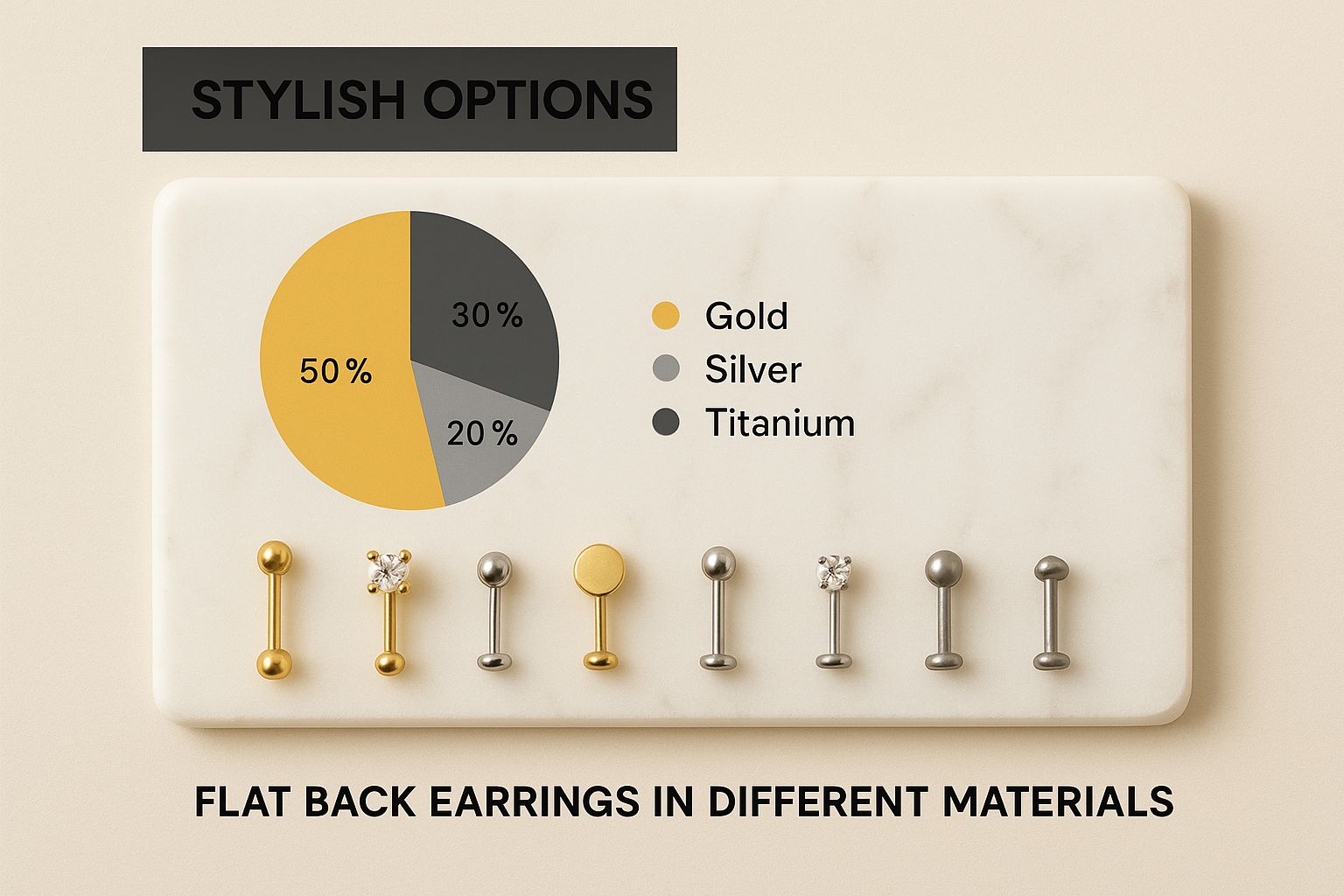
It’s not just about the metal, either. The type of gemstone can also make a difference. Stones like moissanite are non-porous, so they don't easily trap bacteria that can irritate a piercing.
When you bring all these elements together—a thoughtful design that removes pressure, top-notch metals, and clean gemstones—you get an earring you can pop in and forget about. It's comfort you can count on.
Earring Back Comparison for Comfort and Sensitivity
Choosing the right earring back is crucial, especially if you have sensitive skin or plan on wearing your jewelry 24/7. This table breaks down how flat backs stack up against other common types.
| Feature | Flat Back (Labret) | Butterfly Back | Screw Back |
|---|---|---|---|
| Comfort | Excellent. No poking, ideal for sleeping and phone use. | Fair. Post can poke, causing discomfort during sleep. | Good. More secure than butterfly, but post can still poke. |
| Security | Excellent. Threaded or push-pin design is very secure. | Fair. Can loosen over time and fall off easily. | Very Good. Threads provide a secure fit, less likely to loosen. |
| Hygiene | Good. Easy to clean; smooth surface reduces buildup. | Poor. Difficult to clean thoroughly, can trap debris. | Fair. Threads can be tricky to clean and may trap bacteria. |
| Allergy Risk | Low. Often made with implant-grade, nickel-free metals. | High. Often made of cheaper metals, even on premium earrings. | Medium. Depends on the metal quality of the back and post. |
As you can see, the flat back design really stands out for its combination of security, hygiene, and most importantly, all-day comfort for sensitive ears.
How to Choose Your Perfect Pair
Finding your ideal flat back earrings really boils down to three things: the right material, a great stone, and a perfect fit. Get these right, and you'll have a pair of earrings that not only look fantastic but feel like they’re barely there.
Start With the Metal
First thing's first: let's talk metal. If you have sensitive ears, you know the struggle is real. This is where 925 sterling silver jewelry comes in—it’s a total game-changer. Its hypoallergenic quality means you can say goodbye to the irritation and redness that often comes with other metals.
Pick a Quality Stone
Next up, the sparkle. For a look that’s both stunning and smart, moissanite studs are an amazing choice. They have an incredible brilliance that rivals any traditional gemstone, they're super durable for everyday wear, and they're an ethical option you can feel good about.
Get the Fit Just Right
Finally, don't forget about the post length. This is crucial for comfort. You're aiming for a snug fit—not so tight it pinches, but not so loose it snags.
Here’s a quick guide:
- A 6mm post is usually perfect for a standard, fully healed lobe piercing.
- An 8mm post is better if you're dealing with a new piercing that needs swelling room, or for thicker areas like cartilage.
Nailing the size is what makes these earrings so comfortable you can forget you're even wearing them. For a little more style inspiration, take a look at our guide on what jewelry to gift for special occasions.
Common Questions About Flat Back Earrings
Thinking about making the switch to flat back earrings? It's normal to have a few questions. Let's walk through some of the most common things people wonder about before they dive into the world of truly comfortable earrings.
Are They Hard To Put In?
There's a tiny learning curve, but you'll have it down in no time. You just guide the flat back post through your piercing from behind your ear. Then, you push the decorative front into the post until it clicks securely in place.
That's it! After a try or two, the incredible comfort and peace of mind you get from knowing they won't fall out make those first few seconds of practice totally worth it.
Can I Use Them For a New Piercing?
Yes, absolutely! Many professional piercers actually prefer using flat back labret studs for initial piercings.
Their super stable design means less movement and snagging, which cuts down on irritation. This gives your new piercing a much better chance to heal cleanly and quickly. Just make sure the earring is a body-safe material, like implant-grade titanium or high-quality 925 sterling silver jewelry.
What Is The Best Way To Clean Them?
Keeping your flat back earrings sparkling is easy. For a quick daily clean, you can just use a gentle soap or a saline spray while they're still in your ears.
For a deeper clean, it’s a good idea to take them apart and let both pieces soak for a bit. We have a great guide on how to clean gold jewelry at home, and the tips work wonderfully for sterling silver, too.
Ready to feel the difference for yourself? Find your perfect match of style and comfort in Molenia's beautiful collection of moissanite and sterling silver flat back earrings.