

What Is Hypoallergenic Jewelry for Sensitive Skin
So, what exactly is hypoallergenic jewelry? Simply put, it's jewelry made from metals that are far less likely to cause an allergic reaction. This product changes the game for anyone who has ever dealt with the redness, itching, or rashes that some metals can cause.
Why Hypoallergenic Jewelry is a Must-Have for Sensitive Skin
Have you ever put on a gorgeous pair of earrings, only to take them off hours later with sore, itchy earlobes? That frustrating reaction is a classic sign of contact dermatitis. Most of the time, the problem is nickel. Jewelry makers often add this metal to regular jewelry to make it stronger and cheaper.
Manufacturers create hypoallergenic jewelry to fix this problem. It either removes nickel completely or uses minuscule amounts that won't cause a reaction. This means you can finally enjoy beautiful accessories without the painful aftermath. Brands like Molenia Jewelry are so focused on crafting pieces that are as gentle on your skin as they are stylish.
The Growing Need for Skin-Safe Metals
If you think you're alone in your jewelry struggles, you're not. Metal allergies are surprisingly common, and nickel sensitivity is at the top of the list.
The numbers are pretty eye-opening: about 10-20% of people worldwide have some form of metal allergy. Nickel is the biggest offender, affecting around 17% of women and 3% of men.
This is why the material of your jewelry matters so much. When your skin touches a metal it doesn't like, like nickel, your immune system can react.
This can cause an itchy rash. Manufacturers create hypoallergenic pieces from better, purer materials. Your body is more likely to accept them, giving you a comfortable, worry-free experience. These jewelry market insights show a clear trend toward consumers demanding these safer options.
Understanding hypoallergenic jewelry is the first step to building a collection you will love and wear every day.
Have you ever worn a beautiful new pair of earrings, only to find your skin red, itchy, and irritated a few hours later? A frustratingly common problem exists, and the culprit almost always involves a specific metal in the jewelry itself.
This reaction is a form of contact dermatitis, which is just your body’s way of saying it doesn't like something it's touching. The number one offender in the jewelry world? Nickel.
The Sneaky Science of a Skin Reaction
Manufacturers often mix nickel into metal alloys to make jewelry more durable and less expensive. The trouble is, when you sweat, tiny particles of this metal can seep out and your skin can absorb them.
If you have a sensitivity, your immune system flags these nickel particles as a threat and goes on the attack. This defensive response is what causes that all-too-familiar rash, itching, and redness.
You don't necessarily inherit a nickel allergy. It often builds up over time from repeated contact. Once you develop the sensitivity, though, it's usually for good.
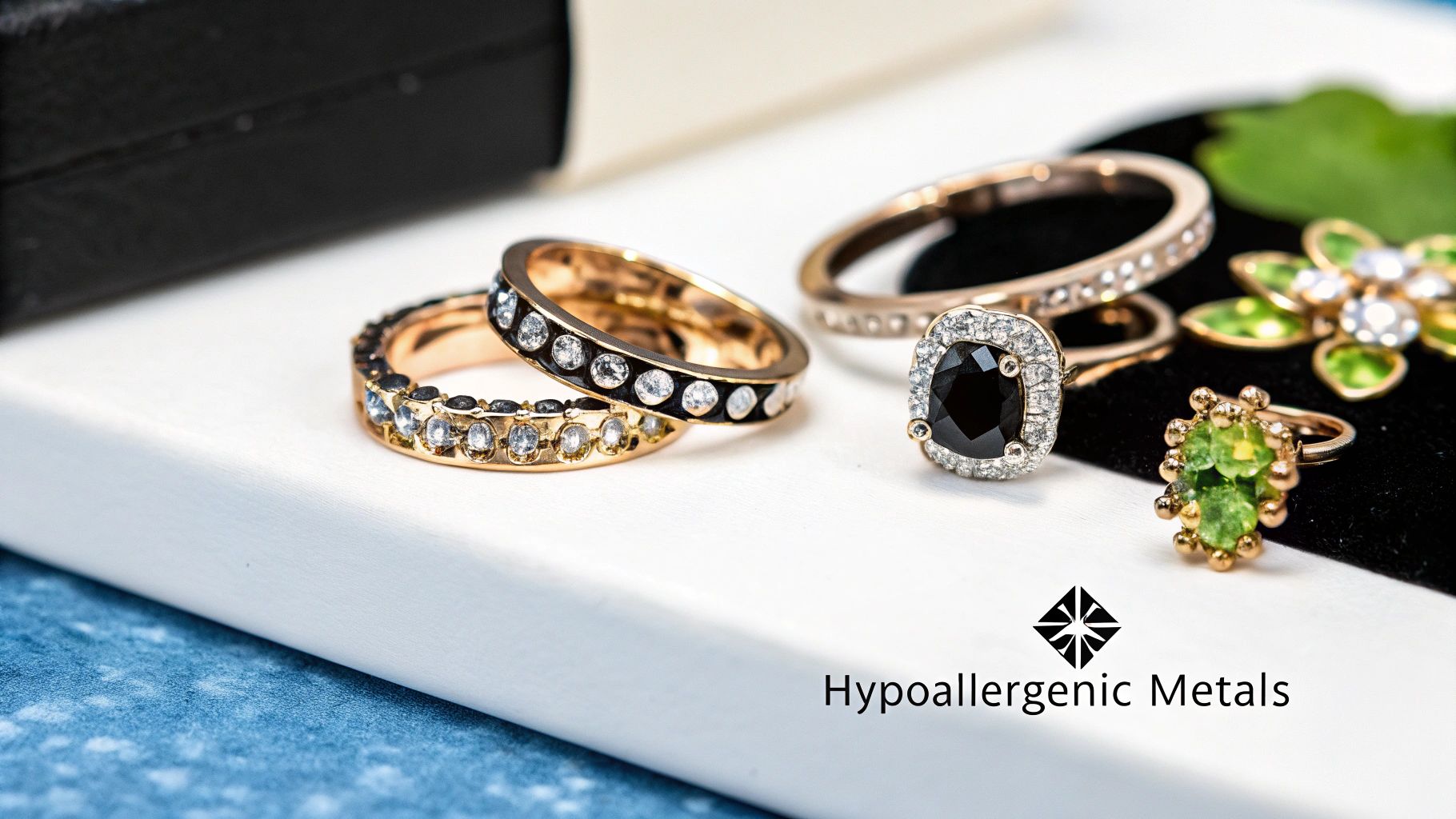
While nickel gets most of the blame, it’s not the only metal that can cause a fuss. Other common irritants often found hiding in costume or low-quality jewelry include:
- Cobalt: This metal often goes hand-in-hand with nickel in alloys and can trigger similar allergic reactions.
- Chromium is sometimes used in plating to make jewelry shiny. However, it can also cause contact dermatitis.
Knowing what to look out for is the first step to finding jewelry that feels as amazing as it looks. This is especially true for earrings, since earlobes can be extra sensitive.
We explain how the right design can significantly matter. That’s why we believe flat back earrings are the best choice for sensitive ears. Once you can pinpoint the troublemakers, shopping for comfortable pieces becomes so much easier.
Discovering the Best Metals for Sensitive Skin
Trying to find beautiful jewelry when you have sensitive skin can feel like a minefield. But it must not be.
It all comes down to knowing which metals are your friends and which are your foes. The best hypoallergenic metals have very little or no nickel. Nickel is the main cause of itchy, red reactions.
Once you know what to look for, you can choose stunning pieces with total confidence. Let’s explore some of the best skin-friendly metals out there.
Your Guide to Skin-Friendly Jewelry Metals
To make things easier, I've put together a quick guide comparing the top hypoallergenic metals. This should help you pinpoint the perfect option for your style, needs, and budget.
Metal Key Benefits Ideal For Price Range
Platinum Naturally 100% nickel-free, incredibly durable, and has a brilliant white luster. Wedding rings, heirloom pieces, and everyday luxury.
$$$$ (Premium) High-Karat Gold 18K and 22K gold have high purity, minimizing reaction risk. Classic and timeless. Fine jewelry, special occasion pieces, and daily wear.
$$$ (High-End) Titanium Biocompatible, feather-light, yet exceptionally strong and scratch-resistant. Modern designs, watches, and body jewelry.
$$ (Mid-Range) Niobium
Pure elemental metal, great for extreme sensitivities. Can be anodized into vibrant colors. Earrings, body piercings, and colorful, unique designs.
$$ (Mid-Range) Surgical Steel 316L grade is corrosion-resistant and safe for most mild sensitivities. Fashion jewelry, watches, and durable, affordable pieces.
$ (Affordable) This table gives you a great starting point, but let’s dive a little deeper into what makes these metals stand out.
Premium and Pure Metals
- Platinum: This is the king of hypoallergenic metals. Prized for its brilliant shine and toughness, platinum is naturally pure and 100% nickel-free. A fantastic choice for wedding bands or any piece you plan on wearing for a lifetime.
- High-Karat Gold: While pure 24K gold is too delicate for everyday wear, higher karats like 18K or 22K gold are wonderful options. They have a high percentage of pure gold.
- The other metals in the alloy, like copper or silver, are less likely to react. If you want to know how different alloys work, check our guide. It explains why gold jewelry tarnishes.
Modern and Durable Alternatives
You don't have to stick to traditional precious metals to find great hypoallergenic jewelry. A few modern materials offer amazing benefits, blending high-tech durability with sleek style.
- Titanium: This metal is a real powerhouse. Completely biocompatible, which is a fancy way of saying your body won't react to it. Also surprisingly lightweight, but strong enough to handle the bumps and scrapes of daily life.
- Niobium: Just like titanium, niobium is a pure element and a haven for super-sensitive skin. A popular choice for earrings and body jewelry. Nickel-free and can be anodized. This process creates a rainbow of beautiful, shiny colors.
- Surgical-grade stainless steel stands out as a superior option among stainless steels. You want to look for 316L surgical-grade steel. While it can contain small amounts of nickel, the metal holds it tightly. This means it rarely causes a reaction, making it safe for most people.
Choosing the right material makes all the difference, as you can see below.
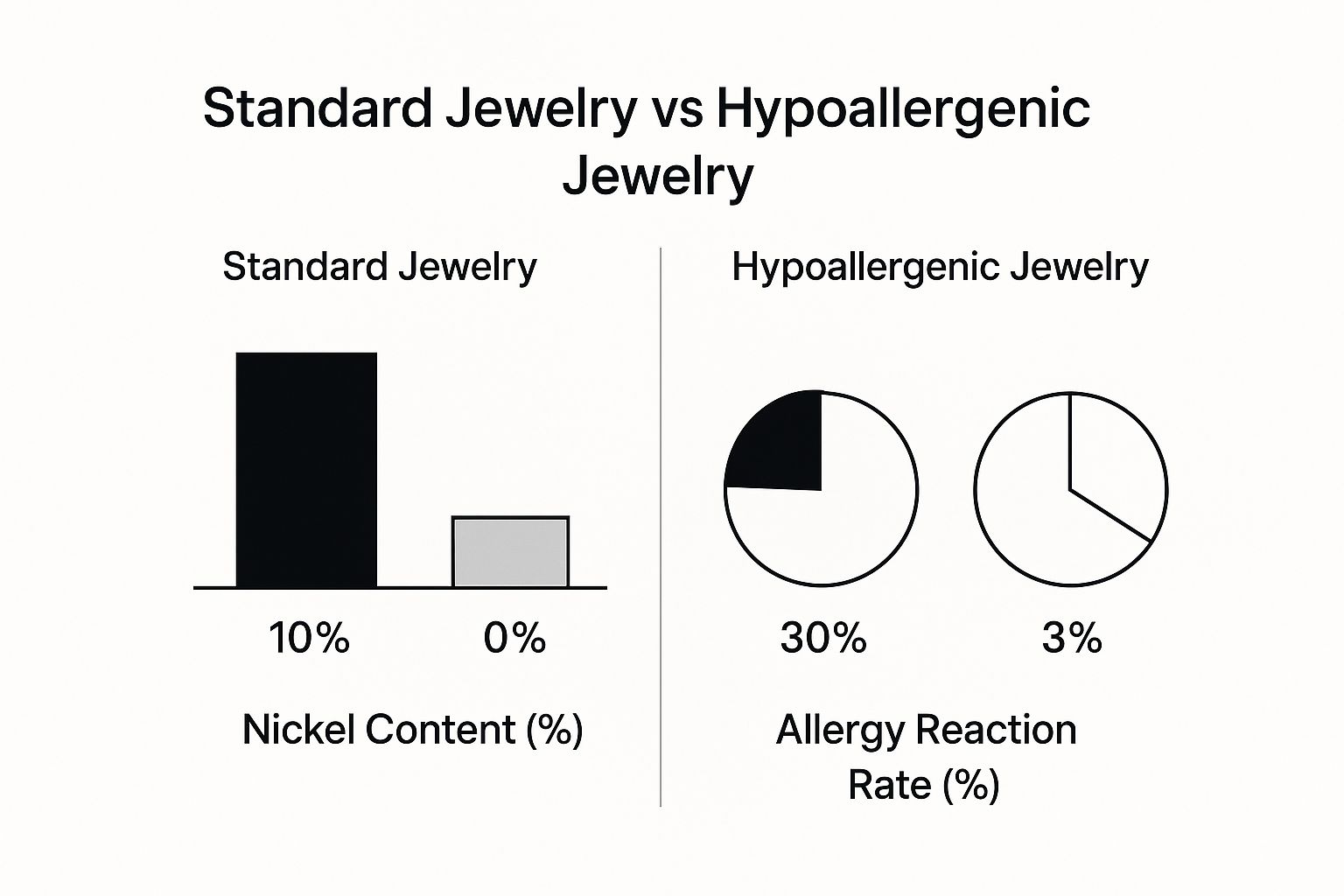
When you know what to look for, you can finally build a jewelry collection that not only looks incredible but feels great, too.
How to Choose and Care for Your Jewelry
Alright, so you know which metals play nice with your skin. Now for the fun part: building a collection you can actually wear without a second thought. Picking the right hypoallergenic jewelry is less about guesswork and more about knowing what to look for.
A great place to start is by playing detective and checking for purity stamps. These tiny markings are like a quality guarantee. You will see a ‘925’ stamp on real sterling silver. Jewelers often mark high-karat gold with ‘18K’ or similar.
But for the ultimate peace of mind, the most important label to find is ‘nickel-free.’ That’s your direct confirmation that the mix left out the number one culprit for skin irritation.
Shopping Smart and Supporting Transparency
The single best way to know you're getting the real deal is to buy from brands that are upfront about their materials. When a company is transparent, it means they stand behind their quality and are happy to tell you exactly what’s in their jewelry. Brands like Molenia Jewelry create beautiful pieces that are also gentle on your skin.

When you notice a focus on quality materials and good craftsmanship, it’s a sign you’ve found a brand you can trust.
Once you’ve brought your new favorites home, a little TLC is key to keeping them looking great and feeling comfortable. Even the best plated jewelry can wear down over time, which might expose the base metal underneath.
Simple care habits can make all the difference. Proper cleaning and storage protect the finish, keeping your jewelry beautiful and safe against your skin for years.
Taking care of your pieces is easier than you think. Just store them in a cool, dry place—a soft pouch or a lined jewelry box works perfectly—to prevent tarnishing and scratches. A gentle, regular cleaning will also keep them sparkling by removing built-up oils and dirt. For a complete walkthrough, check out our guide on how to clean gold jewelry at home.
Why Skin-Safe Jewelry Is a Sustainable Choice
Picking out hypoallergenic jewelry is about more than just dodging an itchy rash. Actually, a pretty powerful move toward making more conscious, sustainable choices in your everyday life exists.
Think about it: a bigger shift ties the whole reason we're even discussing skin-safe materials. People want products that are ethical, eco-friendly, and just plain better for them.
When you buy a high-quality, hypoallergenic piece, you’re choosing something built to last. The total opposite of the throwaway culture we see in fast fashion exists. These pieces use pure, durable materials, which means less waste and no need to constantly buy replacements.
Aligning Personal Wellness with Planetary Health
This is where personal well-being and planetary health profoundly connect.
Brands like Molenia Jewelry are taking the lead. They use recycled precious metals and ethically sourced gems. This approach ensures the jewelry you love is kind to your skin and gentler on the planet.
Investing in hypoallergenic jewelry is an act of care—for yourself and for the environment. - This choice promotes good craftsmanship.
- It reduces your environmental impact.
Of course, making your sustainable pieces last a lifetime also comes down to good old-fashioned care. A simple maintenance routine is all it takes to preserve their beauty and integrity. To keep your favorite items looking their best, our Molenia care guide has all the essential tips you need.
Common Questions About Hypoallergenic Jewelry
Even after getting the basics down, a few specific questions tend to pop up again and again. Let's tackle some of the most common ones to help you feel completely confident when choosing your next piece.
Is Sterling Silver Considered Hypoallergenic?
This one is a bit tricky, and the answer is "it depends." Manufacturers create sterling silver from 92.5% pure silver, which remains perfectly safe for sensitive skin. The issue lies in the other 7.5%, which is a mix of other metals—usually copper.
For many people, this isn't a problem. But if you have a severe allergy, you'll want to be cautious, as some sterling silver can contain traces of nickel. If you're highly sensitive, sticking with purer metals or rhodium-plated silver is your safest bet.
Can You Develop a Jewelry Allergy Later in Life?
Yes, you absolutely can. Metal allergies, especially to nickel, often develop from repeated or prolonged exposure over time. You can wear a piece of jewelry for years without any problems. Then, you might suddenly get an itchy, red rash.
Once your body flags a metal as an irritant, that sensitivity is usually for life. This is a big reason to choose high-quality, hypoallergenic jewelry from the beginning. It is a smart choice. How can I test my current jewelry for nickel?Wondering if that old necklace is the source of your skin woes? There's a pretty simple way to find out. You can buy an at-home nickel test kit online or from a pharmacy.
These kits come with a special solution. Just dab a drop onto a small, hidden spot on your jewelry. If the solution changes color, it's detected nickel, and you’ve found your culprit. It’s a great first step in cleaning out your jewelry box.
For more answers to your questions, feel free to check out our detailed Molenia FAQ page.


