

How to clean sterling silver jewelry: simple, safe guide
Ever pulled out your favorite silver ring only to find it looking dull and, well, a little sad? Before you start scrubbing, it helps to know what you’re up against. That dark, grimy layer is called tarnish, and it’s a totally natural chemical reaction. It happens when the metals in your jewelry react with sulfur compounds floating around in the air.
So, Why Does My Sterling Silver Tarnish Anyway?
Here's the deal: "sterling silver" isn't pure silver. It’s actually an alloy, which is a mix of metals. Specifically, it's 92.5% pure silver blended with other metals, most often copper. This is why you’ll see that little "925" stamp on your pieces. The addition of copper is what gives the silver strength and durability, but it's also the main reason it tarnishes.
If you want to dive deeper into the history and meaning behind that stamp, this is a great read on the significance of '925' in silver jewelry.
Don't worry, you're not alone in this battle against tarnish. It happens to everyone. Some studies have even shown that over 80% of sterling silver owners spot tarnish within the first six months, especially if they live somewhere humid.
The good news? It’s completely reversible and easy to clean. And if you’re curious about jewelry that’s built to avoid this whole process, you might want to check out some https://www.moleniajewelry.com/blogs/molenia-jewelry-blogs/non-tarnish-jewelry.
The Jeweler's Go-To: A Gentle Polishing Cloth
When it comes to keeping your silver looking its best day-to-day, the first thing any experienced jeweler will tell you is to grab a high-quality polishing cloth. It’s genuinely the safest and most effective trick in the book for regular upkeep.
This isn't just any old rag. A specially designed cloth, like the Molenia jewelry polishing cloth, is infused with micro-abrasives and cleaning agents that are tough on tarnish but incredibly gentle on your jewelry. Remember to use long, back-and-forth strokes, not small circles, to bring back that brilliant shine without buffing away fine details.
As a rule of thumb, a good cloth can handle 60-70% of light tarnish, which is usually more than enough for routine cleaning. This tip comes straight from the pros, and you can even see it echoed in publications like Harper's Bazaar.
Making this a quick weekly habit is the real secret to preventing heavy tarnish from building up in the first place. For a deeper dive into the right techniques, check out our complete guide on how to polish silver jewelry.
Tackling Heavier Tarnish With DIY Solutions
When a simple polishing cloth just isn't cutting it against stubborn tarnish, it's time to head to the kitchen. You'd be surprised what a few common household items can do to bring back that brilliant shine to your favorite Molenia sterling silver pieces.
For everyday buildup or light discoloration, your first move should be a gentle bath. Just a bowl of warm water with a few drops of mild, phosphate-free dish soap can work wonders. Let the jewelry soak for a few minutes, then use a soft-bristled toothbrush to gently scrub away the grime.
But what about the really tough stuff? For that deep, dark tarnish that makes you think a piece is lost for good, the baking soda and aluminum foil method is an absolute game-changer. It’s a classic for a reason.
This handy visual breaks down exactly when to use which cleaning method and how to prevent tarnish in the first place.
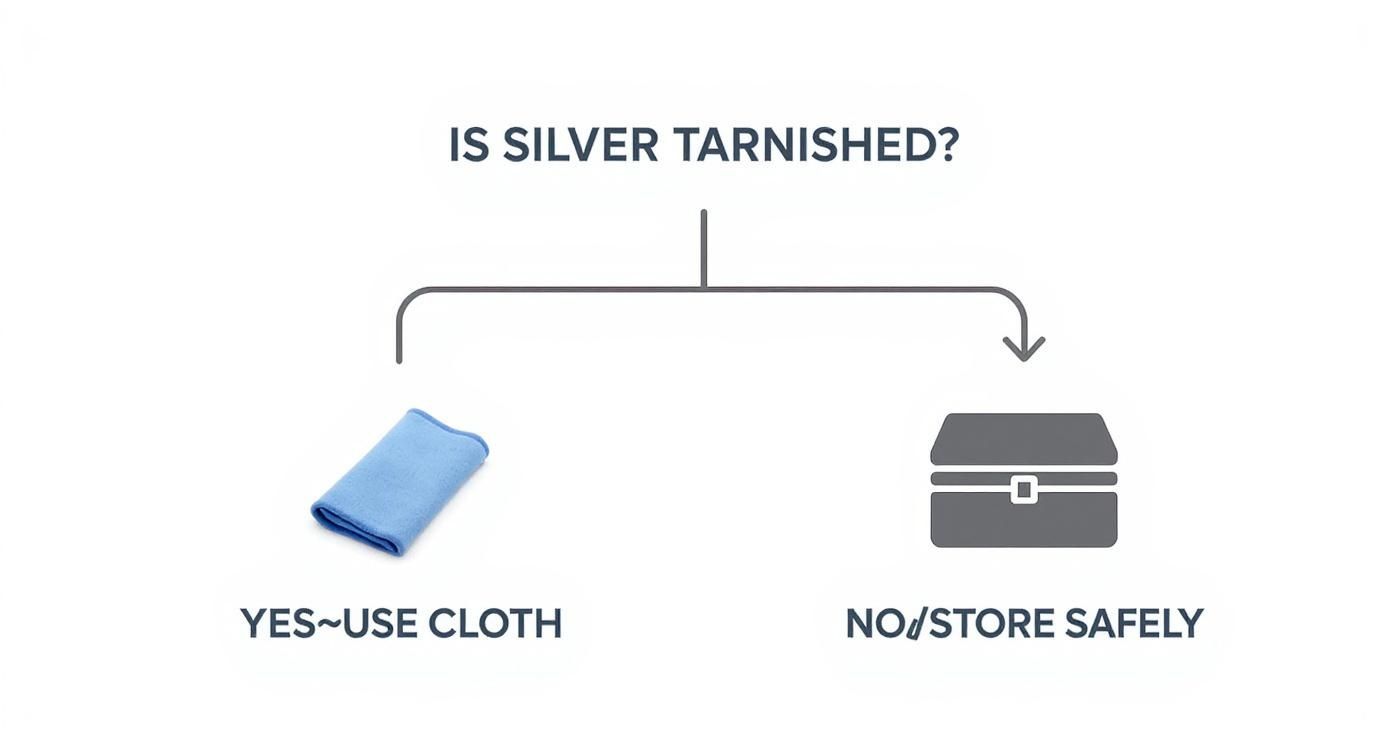
As you can see, the first line of defense is always a good polishing cloth. If that doesn't work, it's time for a deeper clean. And of course, proper storage is key to keeping your silver looking its best for longer.
DIY Silver Cleaning Method Comparison
To help you decide which at-home method is right for your situation, here's a quick breakdown of the two most effective approaches.
| Method | Best For | Required Materials | Caution |
|---|---|---|---|
| Mild Soap & Water | Light, everyday grime and dirt. Safe for pieces with gemstones. | Warm water, mild dish soap (phosphate-free), soft toothbrush. | Avoid harsh detergents. Be very gentle around delicate settings or stones. |
| Baking Soda & Foil | Heavy, dark tarnish on plain sterling silver pieces. | Boiling water, baking soda, aluminum foil, non-metallic bowl. | Do not use on pieces with gemstones or pearls, as it can damage them. |
Ultimately, the soap and water method is your go-to for regular maintenance, while the baking soda and foil trick is the heavy-hitter for serious restoration projects.
The foil method, in particular, creates a fantastic little chemical reaction that lifts 85-95% of tarnish in just a few minutes, transferring the sulfur from the silver to the foil. It's like a mini science experiment that saves your jewelry.
For a complete walkthrough of these techniques and more pro tips, be sure to check out our full Molenia care guide.
When It's Time for the Big Guns: Commercial Silver Cleaners
I'm a big fan of DIY cleaning methods, and honestly, they handle most tarnish beautifully. But every now and then, you come across a piece with stubborn, deeply blackened tarnish that just won't budge.
This is when you might need to bring in a commercial silver cleaner. I'm talking about the potent dips and heavy-duty polishes you see on store shelves. They’re formulated to cut through severe tarnish fast, making them a good last-resort option.
A word of caution, though: handle these products with care. Many contain some pretty harsh chemicals, like thiourea, which can be overly aggressive. While they get the job done, professional conservators have pointed out that overusing them can sometimes cause pitting or etching on the silver's surface. If you want to dive deeper, the team at Clean My Space shares some great insights on these powerful cleaning secrets.
Crucial Tip: Never, ever use a chemical dip on jewelry that has gemstones. This is especially true for porous stones like pearls, opals, or turquoise. The same goes for any piece with an intentionally oxidized or "antiqued" finish—the dip will strip that beautiful detailing right off and can permanently damage the stones.
Keeping Your Silver Sparkling Longer
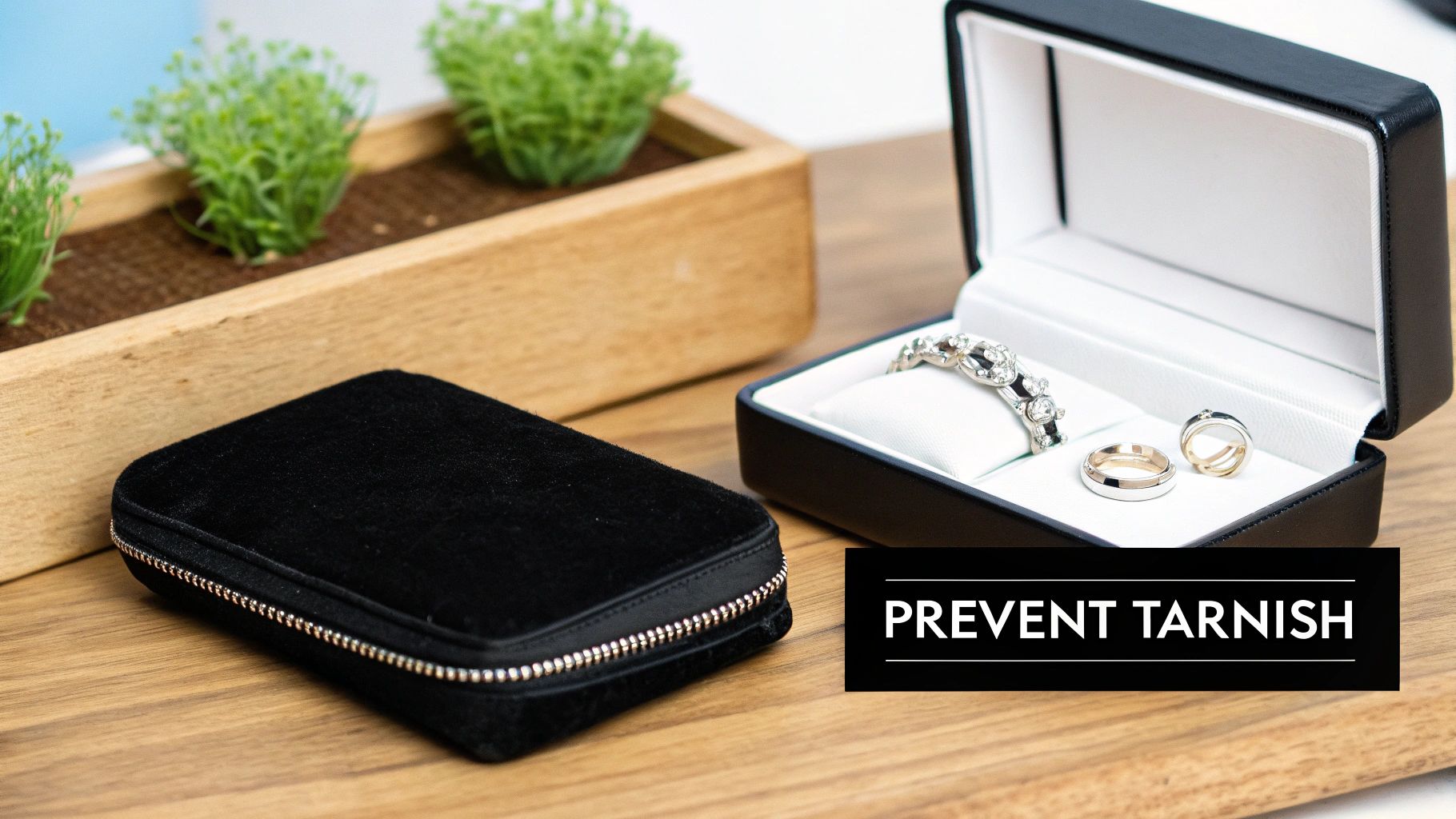
Honestly, the easiest way to deal with tarnish is to stop it before it even starts. You'd be surprised how a few simple, everyday habits can drastically cut down on how often you need to give your silver a deep clean.
Here’s a rule I live by: your jewelry should always be the last thing you put on and the first thing you take off. Think of it as the final, perfect touch to your outfit. Putting it on after lotions, hairspray, and perfumes have settled prevents those chemicals from dulling its shine. Taking it off before you hop in the shower, go for a swim, or head to bed protects it from moisture and friction.
Proper storage is another game-changer. Keeping your pieces in a soft-lined box or even small, airtight bags minimizes contact with the air and humidity that cause tarnishing. For a deeper dive into all the little things you can do, check out our complete guide on how to care for sterling silver. You’ll find even more easy ways to keep all your jewelry sparkling clean that make a real difference.
Your Top Silver Cleaning Questions, Answered
Even after you've mastered the basics, a few tricky questions always seem to pop up. Let's run through some of the most common ones I hear, so you can feel completely confident taking care of your favorite pieces.
How Often Should I Actually Clean My Silver?
For the jewelry you wear all the time, a quick buff with a polishing cloth once a week is a great habit. It keeps everyday grime from building up.
As for a deeper clean? You only need to do it when you start to see that tell-tale tarnish. This could be every few months, but it really depends on things like humidity and what products your jewelry comes into contact with.
I've Heard You Can Use Toothpaste... Should I?
Please, step away from the toothpaste! It's a common myth, but toothpaste is way too abrasive for silver. It’ll leave behind a network of micro-scratches that will permanently dull the finish. Stick to the gentler methods we've talked about—your jewelry will thank you.
What About Pieces with Gemstones?
This is where you need to be extra careful. The answer really depends on the stone itself.
- Hard stones like diamonds can usually handle a gentle cleaning solution without any trouble.
- Porous stones, on the other hand—think pearls, opals, or turquoise—can be easily damaged by chemicals and even water.
For delicate pieces with porous gems, your best bet is to use a polishing cloth and meticulously work around the stone. If you're ever in doubt, it's always safer to be cautious. For more specifics on stone care, our full Molenia jewelry FAQ page has you covered.
Looking for professional-grade polishing cloths or ready to find your next beautifully crafted sterling silver piece? Come explore the collections at Molenia Jewelry. Find your next favorite at https://www.moleniajewelry.com.


