

How to Polish Silver Jewelry and Make It Sparkle
Ever pulled out your favorite silver necklace only to find it looking a bit sad and dingy? Maybe it's developed some dark, moody spots? That's tarnish, and it happens to the best of us. It's just a natural reaction when silver comes into contact with sulfur in the air.
The good news? It’s totally reversible. I'll walk you through exactly how to polish silver jewelry and get that brilliant shine back using a few simple, safe tricks I've picked up over the years.
So, Why Does Silver Tarnish Anyway?
Tarnish is really just a thin layer of corrosion that builds up on silver over time. It’s a chemical reaction, plain and simple. Sulfur compounds are the main culprit, and they're everywhere—in the air, in foods like onions and eggs, and even hiding in your lotions and perfumes.
This is why even the most cherished, well-cared-for pieces can start to look a little discolored. Once you understand what's causing it, you can pick the right cleaning method for the job, whether that's a quick DIY fix or something more heavy-duty like Molenia's liquid metal polish.
It’s a huge market for a reason; people spent USD 2.5 billion on silver cleaning products in 2023 alone! Of course, if you'd rather sidestep the issue entirely, you might want to check out our guide on non-tarnish jewelry.
Getting Your Silver Polishing Toolkit Ready
Before you even think about tackling that tarnish, let's get your workstation set up. Having the right tools on hand is the secret to getting a brilliant shine without accidentally scratching or damaging your favorite pieces. The good news? You likely have most of what you need already.
Things like a soft microfiber cloth and some mild dish soap are your first line of defense for routine, light cleaning. They're gentle, effective, and perfect for keeping new tarnish from settling in.
This quick guide can help you figure out if a simple home polish will do the trick or if it’s time to call in a professional.
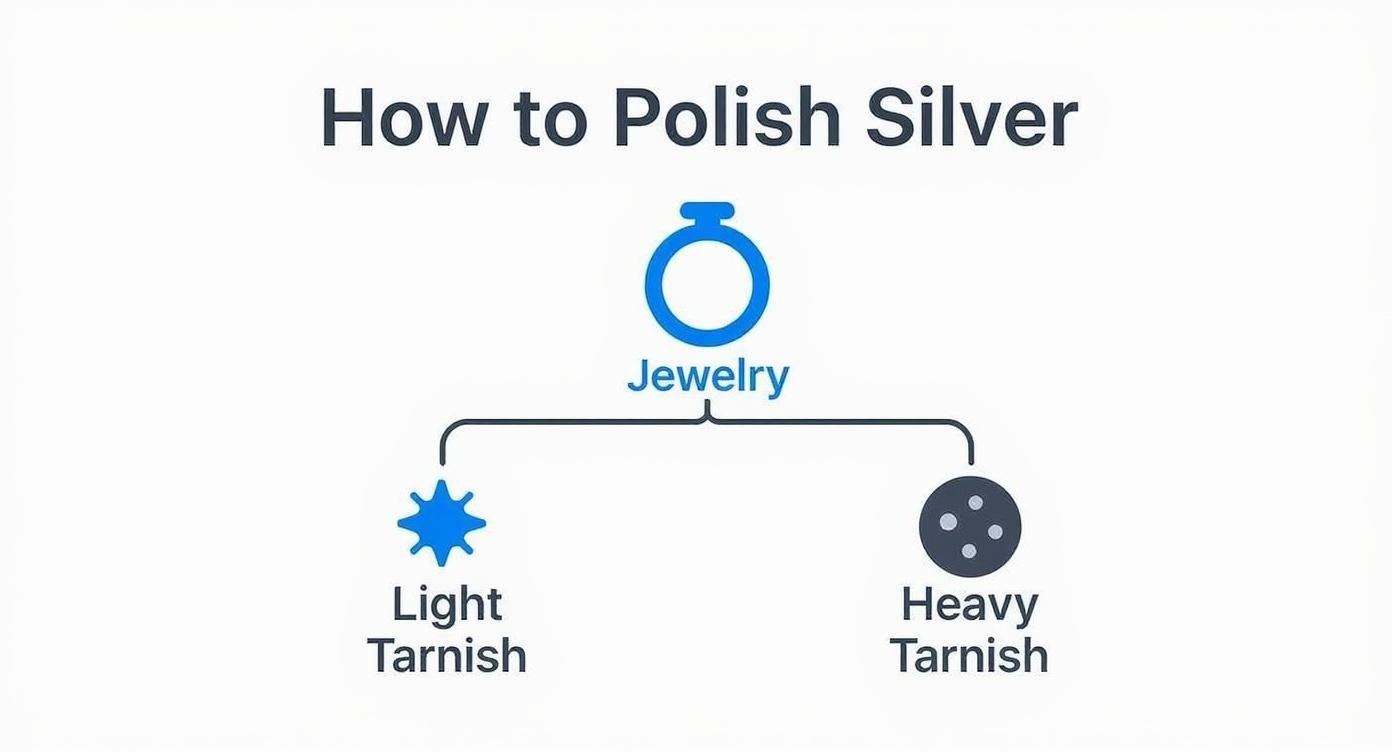
The most important thing to remember is to match your cleaning method to the level of tarnish. For more stubborn discoloration that soap and water won't touch, you'll need something with a bit more power, like Molenia's liquid metal polish. It’s specifically designed to cut through tarnish without being too abrasive.
If you want to dive deeper into the best practices, we have a whole guide on how to care for sterling silver that covers everything you need to know.
The Essential Supplies
Here’s a quick checklist of what I always keep in my silver care kit:
- Soft, lint-free cloths: Microfiber is perfect for this. You'll want at least two—one for applying polish and one for buffing.
- A dedicated silver polish: Whether it's a cream, liquid, or treated cloth, make sure it's formulated specifically for silver.
- Mild dish soap: A gentle, phosphate-free soap is ideal for a preliminary wash.
- A soft-bristled brush: An old, soft toothbrush works wonders for getting into intricate designs and crevices. Just be sure it’s very soft to avoid scratches.
- A small bowl of warm water: You'll need this for rinsing.
Comparing Silver Polishing Methods
It's not always easy to know which polishing method to choose. This table breaks down some of the most common approaches to help you decide what's best for your situation.
| Method | Best For | Potential Risks | Ease of Use |
|---|---|---|---|
| Soap & Water Wash | Light, fresh tarnish and routine cleaning. | Very low risk; safe for most silver jewelry. | Very Easy |
| DIY Paste (Baking Soda) | Moderate tarnish on sturdy, unadorned pieces. | Can be abrasive; may scratch delicate or plated items. | Easy |
| Commercial Silver Polish | Heavy tarnish and restoring a high-shine finish. | Harsh chemicals; requires good ventilation. | Moderate |
| Professional Polishing | Heavily tarnished, antique, or gemstone-set jewelry. | None (if done by a reputable jeweler). | Very Easy |
Ultimately, choosing the right method comes down to the piece of jewelry itself and how much tarnish you're dealing with. When in doubt, always start with the gentlest method first. You can always move on to something stronger if needed.
Bringing Your Silver Back to Life at Home
So, you're ready to bring back that incredible shine? My go-to home remedy for dealing with tarnish is a simple baking soda and water paste. It's surprisingly effective and something you probably already have in your kitchen.
Just mix about two parts baking soda with one part water. You're looking for a thick, consistent paste—think something like toothpaste.
Once you have your paste, use a soft, lint-free cloth to gently rub it onto your silver. The key here is to move in straight, back-and-forth lines, not circles, which can leave tiny swirl marks.
Got a piece with lots of nooks and crannies, like a detailed bracelet clasp or an ornate ring? A soft-bristled toothbrush is perfect for getting into those tough spots without scratching the metal.
After polishing, rinse your jewelry completely under warm running water. Then, make sure to dry it thoroughly with a clean, dry cloth. This last step is crucial for avoiding those pesky water spots that can dull your newly polished piece.
This baking soda method is fantastic for most situations, but there are other great techniques out there, too. For a deeper dive, check out our full guide on how to clean your silver jewelry.
Using a Commercial Silver Polish for Best Results
Sometimes, those DIY home remedies just won't make a dent in seriously stubborn tarnish. When your silver needs a little extra muscle, reaching for a commercial polish is your best bet. These products are specifically formulated with micro-abrasives designed to lift away discoloration and bring back that brilliant shine without harming the delicate metal underneath.
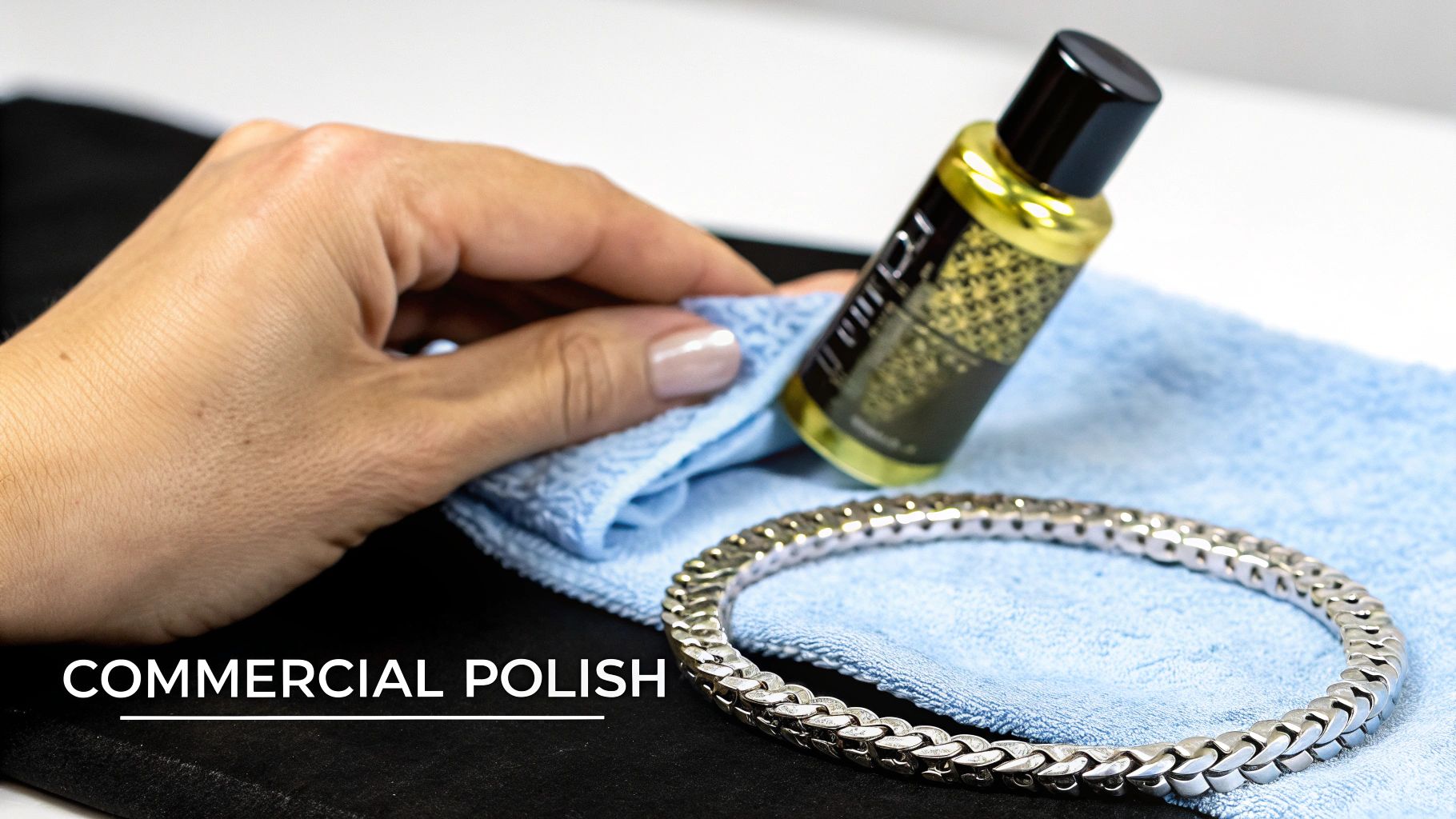
Think of products like a high-quality liquid metal polish or even a multi-functional cleaning paste for polishing. They're engineered for this exact job.
What makes them so effective? Many contain gentle polishing agents like fine rouge, which is essentially iron oxide particles that work to create that flawless, mirror-like finish. It's no wonder the market for these specialized compounds is growing.
For a complete rundown on how to apply these products safely and get the most out of them, be sure to check out our detailed guide right here: https://www.moleniajewelry.com/pages/care-guide.
Keeping Your Silver Sparkling for Longer
You’ve put in the work, and your silver is gleaming again. Now, let’s keep it that way. The real secret to long-lasting shine isn't just about polishing; it’s about smart, everyday care.
Little habits make a huge difference. Storing your pieces in anti-tarnish bags or cloth-lined boxes is probably the single best thing you can do. For a deep dive into the best practices, our guide on how to store your jewelry is a fantastic place to start: https://www.moleniajewelry.com/blogs/molenia-jewelry-blogs/how-to-store-your-jewelry
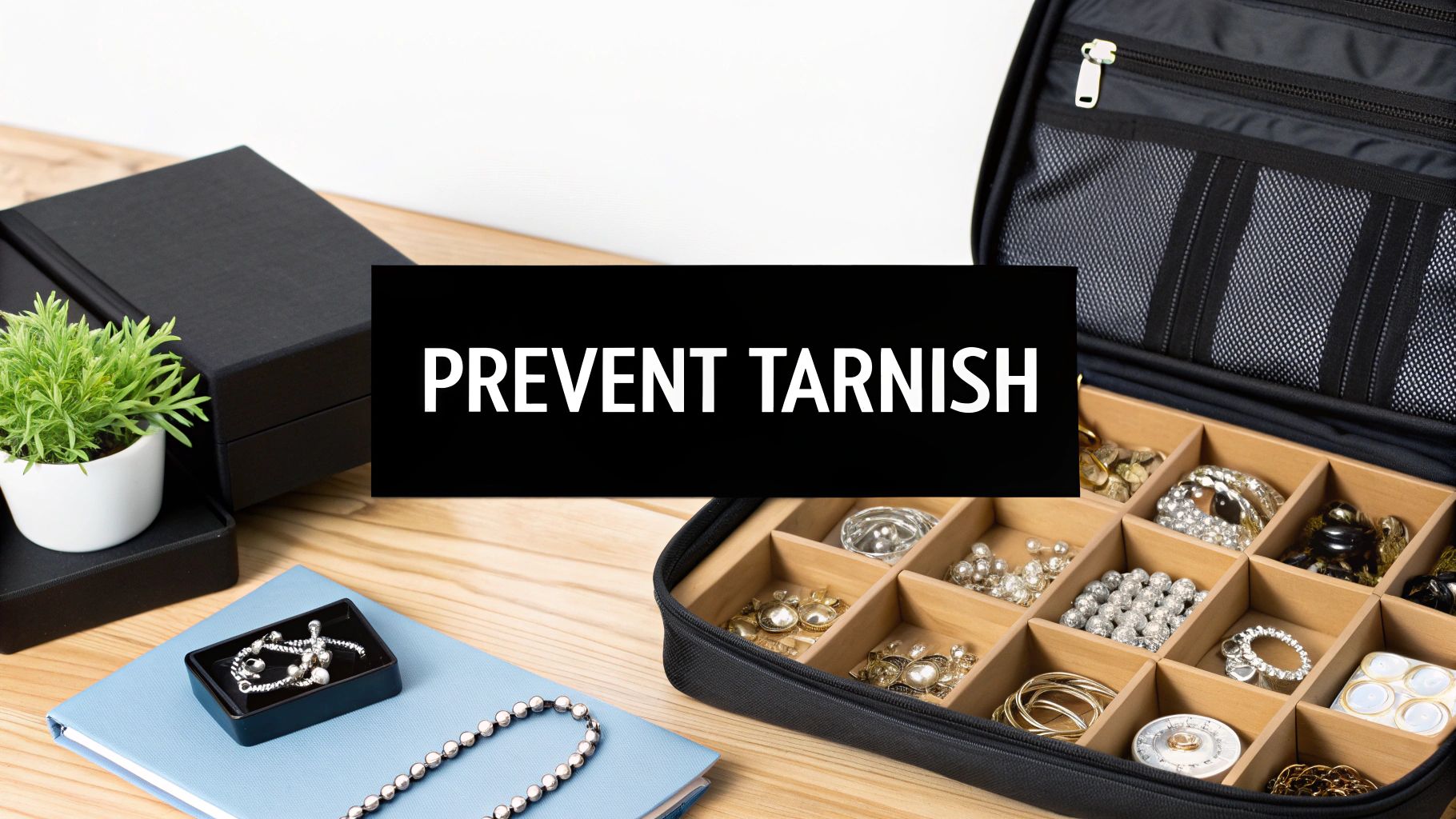
Here are a few more pro tips I’ve learned over the years:
- Last on, first off: Your jewelry should be the last thing you put on (after lotions, makeup, and perfume) and the first thing you take off.
- Wipe it down: Give your pieces a quick wipe with a soft cloth before storing them to remove any oils or moisture from the day.
- Rinse well: When you do clean your silver, a final rinse with distilled water can prevent mineral spots from tap water, a concept well-understood in the role of pure water in detailing for a flawless finish.
It’s clear that people are more interested than ever in preserving their valuables. In fact, the jewelry care market is booming, with projections showing it could reach $1.1 billion by 2033. It just goes to show how much we value keeping our favorite pieces looking their absolute best.
Your Silver Polishing Questions, Answered
Got a few lingering questions about getting that perfect shine? It's completely normal. I've heard just about everything over the years, so let's tackle some of the most common ones I get asked.
What About Using Toothpaste?
This is a big one, and the short answer is: please don't. Think of it this way—toothpaste is designed to scrub tough stains off your teeth, which are much harder than silver.
Most toothpastes contain tiny abrasive particles that will leave microscopic scratches all over your beautiful jewelry. Over time, those tiny scratches build up and make the silver look dull, which is the exact opposite of what you want! It's much safer to stick with a gentle baking soda paste or a polish made specifically for silver.
How Often Should I Be Polishing My Silver?
There’s no hard and fast rule, as it really depends on how often you wear the piece. For your everyday favorites—the rings and necklaces you never take off—a quick buff with a polishing cloth every couple of weeks should do the trick.
You only need to break out the polish for a deep clean when you actually see tarnish starting to form. Less is often more!
Is This Safe to Do on Pieces with Gemstones?
This is where you need to be extra careful. Commercial silver polish is formulated for metal, not for delicate gems.
Porous stones like turquoise, opals, and pearls can be easily damaged or discolored by the chemicals in the polish. If your piece has stones, your best bet is to use a cloth to carefully clean only the silver parts, making sure to steer clear of the gemstones themselves. It takes a little more patience, but it's worth it to protect your whole piece.
For jewelry that shines as bright as you do, explore the beautiful, sustainable collections at Molenia Jewelry. Discover your next favorite piece today at https://www.moleniajewelry.com.


