

How to Care for Gold Plated Jewelry for a Lasting Shine
Caring for your gold-plated jewelry really boils down to gentle, consistent habits. The secret is simply to minimize its exposure to chemicals, moisture, and friction. A quick wipe-down with a soft cloth at the end of the day and storing it in a dry place can make a world of difference, dramatically extending its life and shine.
Your Guide to Preserving Timeless Memories
Welcome to the Molenia guide on keeping your gold-plated treasures looking just as radiant as the day you first wore them. We all love gold-plated jewelry for that perfect touch of luxury, but it does need a bit of thoughtful care to maintain its gorgeous glow.
This guide is more than just a list of dos and don'ts. We want to share the "why" behind each tip, helping you understand how small, daily habits protect that delicate layer of gold that makes your jewelry so special.
Whether it’s an everyday ring or a cherished necklace marking a milestone, you'll find practical, easy-to-follow advice for cleaning, wearing, and storing your pieces. We'll also get into what makes Molenia's thick 14K gold plating so durable, ensuring your personalized keepsakes continue telling your story for years to come.
Think of this as your friendly handbook for making every piece a lasting symbol of your most meaningful moments.
Understanding the Basics of Plated Jewelry
Before we jump into the how-to, it’s helpful to know what gold-plated jewelry actually is. Unlike solid gold, a plated piece has a fine layer of real gold bonded over a base metal, which is often sterling silver or brass. This process gives you a beautiful and much more affordable piece of jewelry.
That thin gold layer, however, is what makes it vulnerable. Things that wouldn't faze solid gold can wear away at the plating over time, eventually revealing the base metal underneath.
The goal of any care routine is to protect this delicate outer layer. Simple preventative measures are far more effective than trying to reverse damage later on.
Why Your Daily Routine Matters
Believe it or not, the biggest threats to your jewelry’s shine are often hiding in your daily routine. Everyday things like perfumes, lotions, hairspray, and even the natural oils on your skin can slowly tarnish and degrade the gold plating.
This guide is all about creating simple, sustainable habits that become second nature. By integrating these small steps, you're not just cleaning your jewelry—you're actively preserving the memories and moments each unique piece represents.
Simple Daily Habits to Protect Your Jewelry
The real secret to making your gold-plated jewelry last isn't some complicated, time-consuming cleaning ritual. It’s all in the small, almost effortless things you do every day. These little preventative habits make a world of difference in keeping that brilliant shine alive.
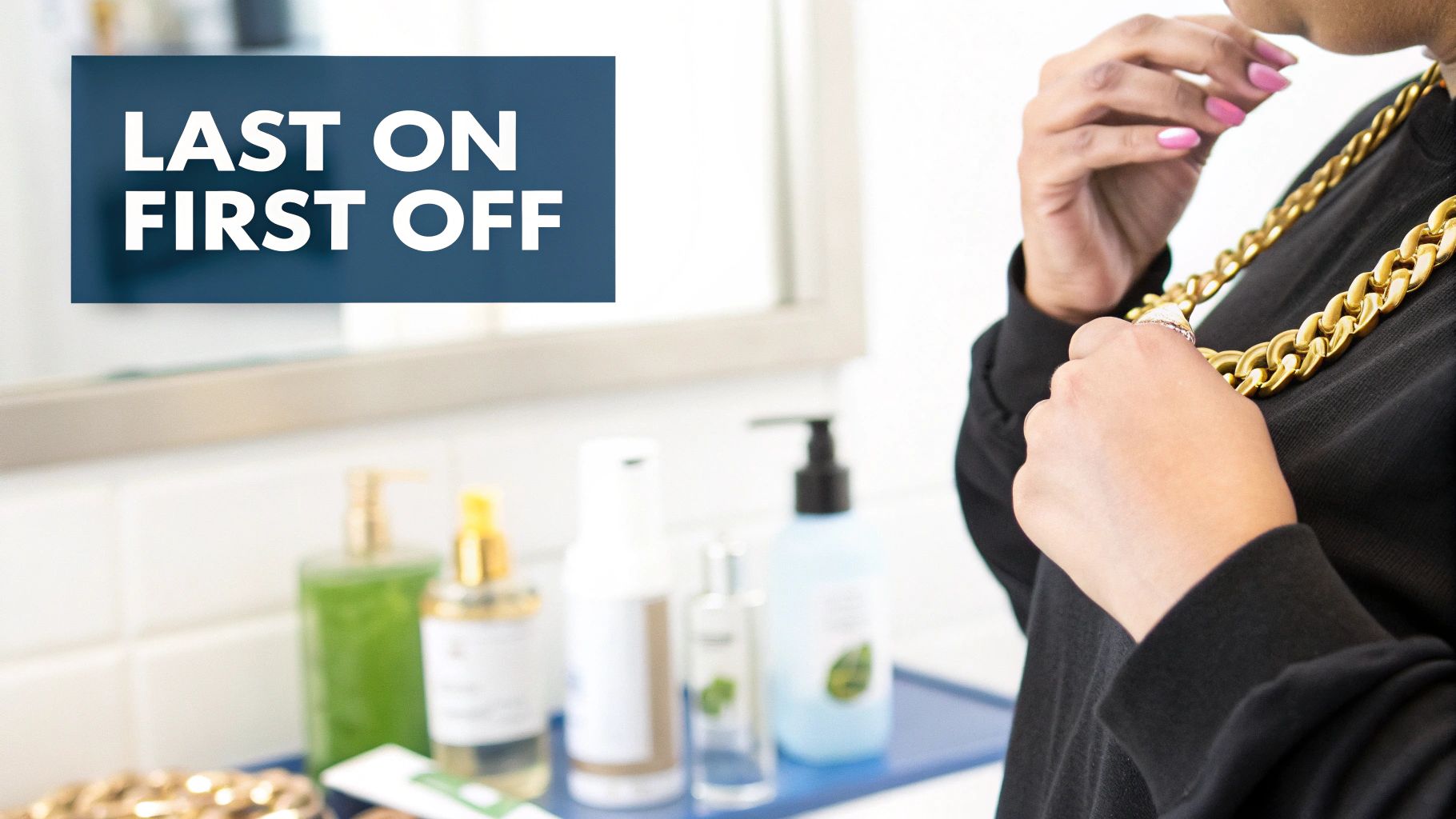
Think of your jewelry as the finishing touch, the final flourish to your look. The most important rule to remember is also the simplest: "Last on, first off." This just means your favorite necklaces, rings, and earrings should be the very last things you put on before you head out the door.
Mind Your Morning Routine
We all have our morning rituals—lotions, perfumes, hairsprays. The thing is, these products contain chemicals that are pretty harsh on the delicate layer of gold on your jewelry. When that residue settles directly onto your pieces, it can speed up tarnishing and wear down the finish.
Just give your products a few minutes to fully absorb and dry before putting on your jewelry. This creates a small but crucial barrier. Before you know it, this simple step will feel as natural as brushing your teeth.
By simply putting your jewelry on last, you sidestep the most common cause of chemical damage, effortlessly extending the life of your favorite pieces.
The impact of this one habit is huge. Experts agree that well-cared-for gold-plated pieces can look great for up to five years, while those exposed to harsh chemicals can start to look dull in just a few months. For brands like Molenia that use a thicker plating, these habits can easily push the lifespan of a piece from two years to five years or even longer.
Navigate Your Day Wisely
Beyond your morning routine, your daily activities can also be tough on your jewelry. Chlorine, saltwater, and even your own sweat are some of the biggest offenders, capable of stripping away the gold plating much faster than you’d think.
It’s a good idea to get into the habit of taking your jewelry off before certain activities. Here’s a quick rundown of when to go bare:
- Before a Workout: Sweat is acidic, and that acidity is corrosive to the plating.
- Before Showering: Soaps and shampoos can leave a filmy residue that dulls the shine, and some contain harsh chemicals.
- Before Swimming: Chlorine and salt are extremely damaging and will cause the gold to fade quickly.
What if you forget to slip off your rings before washing your hands? It happens to all of us. The key is to dry them thoroughly right away. Pay extra attention to any nooks or crannies where moisture can hide. Keeping your pieces dry is one of the best ways to prevent tarnish.
Looking for pieces designed to handle real life? Our guide on selecting everyday jewelry has some great tips. Adopting these simple habits ensures your beloved jewelry remains a beautiful part of your story for years to come.
Gentle Cleaning Methods for a Brilliant Glow
While your daily habits are the first line of defense, a gentle, consistent cleaning routine is what truly keeps your pieces looking brand new. It’s all about removing the daily buildup of oils and residue to restore that brilliant luster. The key here is to be delicate. Aggressive scrubbing or harsh chemicals can easily strip away the very layer of gold you’re trying to protect.
Think of it less like a deep clean and more like a gentle spa day for your favorite accessories.
The Quick Daily Wipe-Down
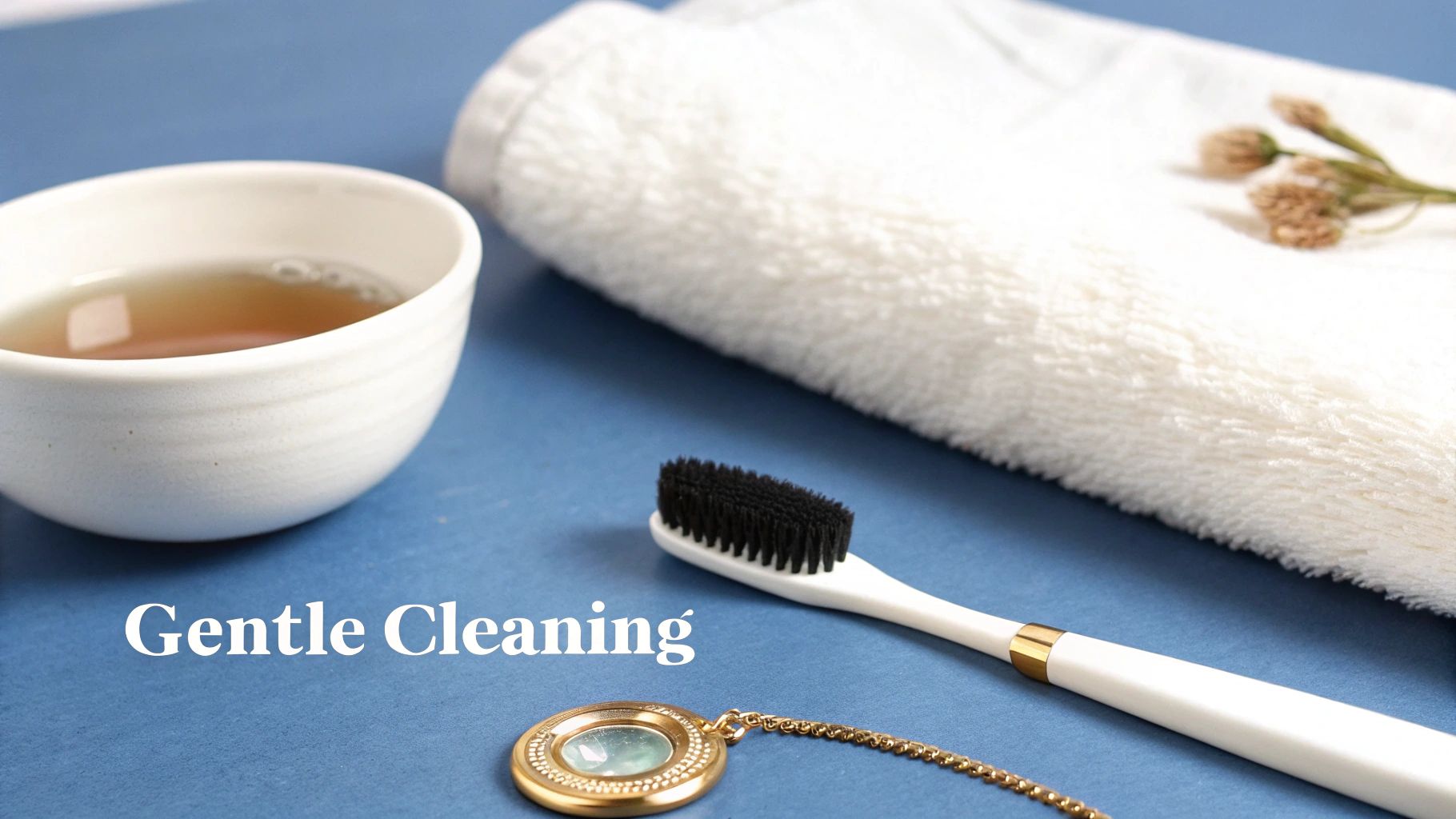
Honestly, the most effective cleaning method is also the simplest. All you need is a soft, lint-free cloth—a microfiber cloth or a dedicated jewelry polishing cloth works perfectly.
At the end of the day, as you're taking off your jewelry, just give each piece a quick, gentle wipe. This little two-minute ritual is surprisingly powerful. It lifts away the lotions, skin oils, and dust that have accumulated throughout the day, stopping them from settling in and causing long-term tarnish.
The Deeper Weekly Refresh
For a more thorough clean, I recommend setting aside a few minutes once a week. This is perfect for getting into the tiny crevices of a detailed charm or the links of a chain where gunk loves to hide.
Grab a bowl of warm water and add just a few drops of a mild, phosphate-free soap (a gentle dish soap is ideal). Let your jewelry soak for about 5-10 minutes. This short bath is just long enough to loosen any stubborn grime without overexposing the plating to moisture.
After its soak, use an ultra-soft toothbrush—seriously, a baby toothbrush is fantastic for this—to gently scrub any detailed areas. The trick is to use a feather-light touch and let the soft bristles do the work. Once you're done, rinse each piece under clean, lukewarm running water and pat it completely dry with another soft cloth.
Key Takeaway: Moisture is the enemy of plated jewelry. Make absolutely sure your pieces are 100% dry before storing them. Even a tiny bit of trapped water can lead to spotting and tarnishing down the road.
As any jeweler will tell you, this regular care makes a huge difference. When sweat and skin residues are left on for weeks, they can gradually eat away at the gold layer. A simple weekly soak and gentle scrub is the best way to preserve your jewelry's integrity for years to come.
Safe Vs Unsafe Cleaning Methods for Gold Plated Jewelry
Knowing how to care for your gold-plated pieces is as much about what not to do as what to do. Using the wrong products can cause irreversible damage almost instantly.
Here's a quick cheat sheet to help you distinguish between what's safe and what will strip the shine right off your jewelry.
| Method | Why It's Safe | Method To Avoid | Why It's Harmful |
|---|---|---|---|
| Warm Water & Mild Soap | Gently dissolves oils and grime without harsh chemicals. | Harsh Chemicals | Bleach, ammonia, and alcohol will corrode and strip the gold plating. |
| Soft, Lint-Free Cloth | Wipes away residue without scratching the delicate surface. | Abrasive Pastes | Toothpaste and baking soda act like sandpaper, scratching the finish. |
| Baby Toothbrush | The ultra-soft bristles can clean crevices without being abrasive. | Treated Polishing Cloths | Cloths for solid gold/silver contain chemicals too strong for plating. |
| Air Drying/Patting Dry | Prevents water spots and tarnish by removing all moisture. | Ultrasonic Cleaners | The intense vibrations can be too aggressive and may damage the plating. |
Sticking to simple, gentle methods is always the best approach. When you treat your plated jewelry with a light touch, you're ensuring it stays beautiful for the long haul.
For an even more detailed walkthrough, be sure to check out our complete guide on how to clean gold jewelry at home.
Smart Storage to Prevent Tarnish and Scratches
We've all done it—taken off our favorite necklace at the end of a long day and left it on the nightstand. While it seems harmless, how you store your jewelry is just as important as how you clean it. Proper storage is your secret weapon against the two biggest enemies of gold plating: tarnish and scratches.
Leaving your pieces out in the open, especially in a humid bathroom, is practically asking for trouble. The combination of moisture and oxygen in the air triggers oxidation, which is the chemical reaction that causes that dull, discolored tarnish. A steamy bathroom is pretty much the worst place for your gold-plated treasures.
Create a Safe Haven for Your Pieces
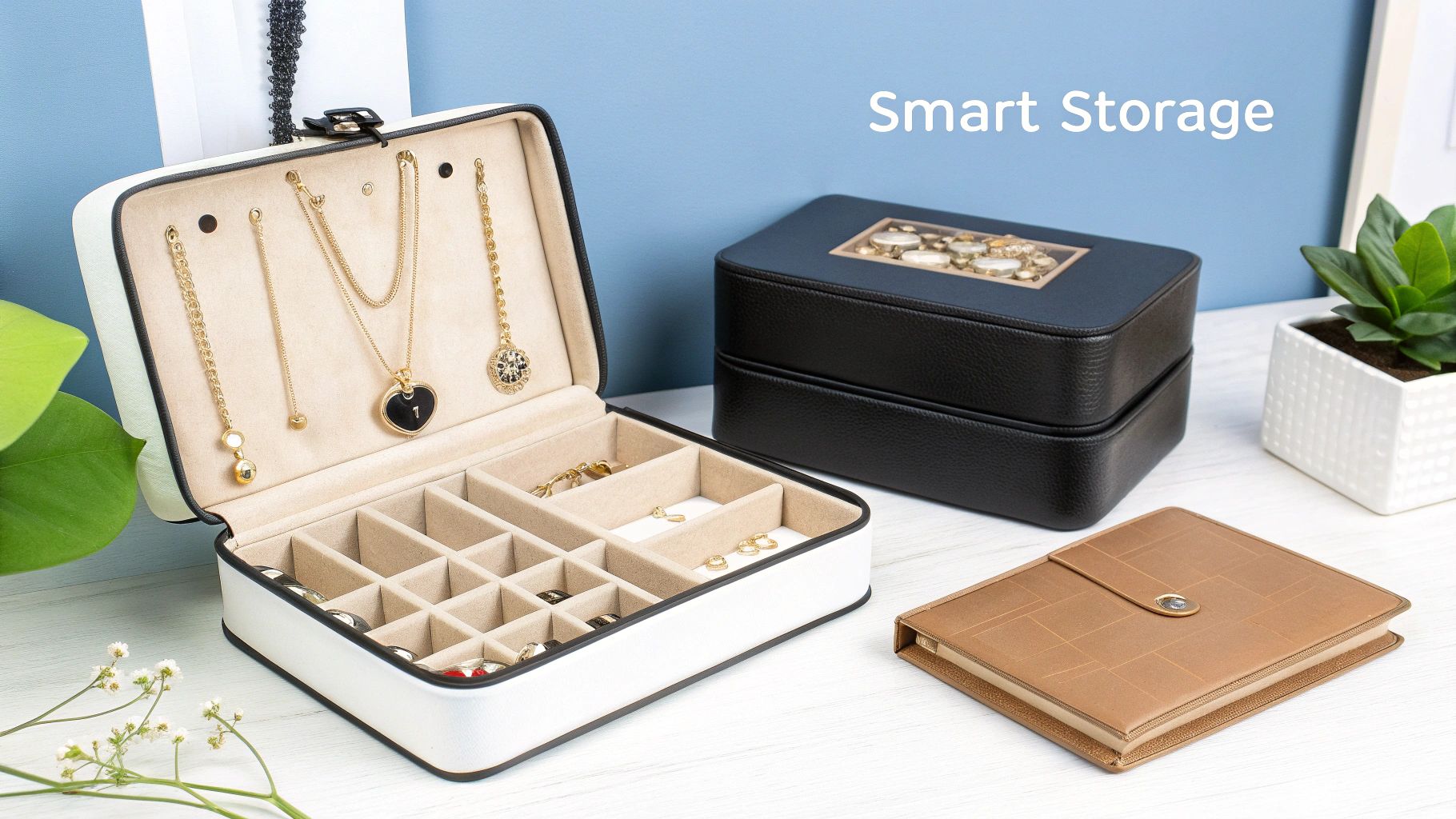
The main goal is to give your jewelry a dry, airtight home. This doesn't mean you need a high-tech vault; some of the best solutions are surprisingly simple.
Here are a few of my go-to options for protecting a collection:
- Anti-Tarnish Pouches: These are fantastic. The soft fabric bags are treated with compounds that soak up the pollutants in the air that cause tarnish. They're perfect for tucking individual pieces away safely.
- Lined Jewelry Boxes: A good quality box with a soft, non-abrasive lining is a game-changer. An elegant quilted jewelry box, for instance, does a great job of shielding your pieces from dust and humidity.
- Airtight Bags: Looking for a super easy and budget-friendly fix? A simple zip-lock bag works wonders. Just make sure to squeeze out as much air as you can before sealing it up.
The core principle is simple: limit exposure to air and moisture. By doing so, you're dramatically slowing down the natural tarnishing process and keeping your jewelry ready to wear.
Preventing Scratches and Tangles
Tarnish isn't the only thing we need to worry about—physical damage is a real threat, too. That delicate layer of gold is relatively soft and can easily be scratched by harder gemstones (like diamonds) or even just the sharp edge of another piece of jewelry.
This is why storing each item separately is a must. I know it’s tempting to toss everything into one cute dish, but it’s a recipe for disaster. Necklaces, in particular, can turn into a tangled nightmare, and trying to free them can put a lot of stress on the delicate chains.
Research on metal corrosion consistently shows that humidity and direct contact with other metals will speed up damage. In fact, jewelry care experts estimate that proper storage alone can prevent 60–80% of avoidable surface wear in the first year. It’s as simple as keeping pieces in their own pouches so they aren't bumping and scraping against each other.
Adopting these simple storage habits will protect your Molenia keepsakes for the long haul, ensuring they stay as beautiful as the day you got them. If you’re looking for more ideas on organizing your collection, check out our complete guide on https://www.moleniajewelry.com/blogs/molenia-jewelry-blogs/how-to-store-your-jewelry.
Knowing When It’s Time for a Touch-Up
Even with the best care in the world, the gold layer on your most-loved pieces will eventually show signs of a life well-lived. This is totally normal, especially for rings and bracelets you wear every day. The trick is learning to spot the subtle signs of wear and tear, so you can keep your jewelry looking its best.
Think of it this way: it's not damage, it's just the natural evolution of a plated piece.
One of the first clues is a slight color change. That beautiful, warm 14K gold glow might start to look a little less vibrant, especially in high-friction spots. I always notice it first on the back of a ring band or the clasp of a favorite necklace—the places that see the most action.
Tarnish or True Wear? Here's How to Tell
It’s easy to confuse simple tarnish with the gold layer actually wearing thin, but there's a key difference. Tarnish is just a surface issue, a bit of discoloration that a gentle cleaning will lift right off. True wear is when the gold itself has physically rubbed away over time.
So, if you’ve given your piece a careful clean and you still see a dull spot or a different color peeking through, you're looking at wear. You'll often spot the silvery or coppery base metal on the sharp edges of a pendant or the tiny prongs holding a stone.
Here's my pro tip: If a problem spot is still there after a proper, gentle cleaning, it's not tarnish. Tarnish vanishes with cleaning, but worn-away plating reveals the metal underneath for good.
So, When Should You Replate?
Deciding to replate is really up to you and how much the wear bothers you. But a good rule of thumb is to start thinking about it when you see noticeable patches of the base metal showing through. When that happens, it's time to chat with a professional jeweler.
Look out for these clear signs that your piece needs a refresh:
- You can see the base metal: This is the most obvious one. If you see a silvery or coppery color instead of gold, the plating has worn through.
- The color is seriously faded: The whole piece has lost that rich, golden hue and looks more pale or washed out.
- It's causing skin irritation: If your skin suddenly becomes sensitive to a piece you've worn for ages, it could be because the base metal (often containing nickel or copper) is now exposed and in contact with your skin.
Replating is like a spa day for your jewelry—it can completely restore a treasured item to its original glory. It's a wonderful way to make sure a sentimental piece from Molenia stays with you for years to come.
If you're curious about what makes different types of gold jewelry tick, check out our guide on the differences between gold vermeil and gold plated pieces.
Common Questions About Gold Plated Jewelry Care
When you're learning how to look after your gold-plated pieces, a few questions always seem to pop up. It's totally normal. Getting the right answers means you can wear your jewelry confidently, knowing you're doing everything right to keep it beautiful. Let’s tackle some of the most common ones I hear.
Probably the biggest question is, "Can I wear my gold-plated jewelry in the shower?" The short answer is, it's really not a great idea. Over time, all that water, soap, and steam will start to dull the shine and can speed up the wear and tear on the plating. Your best bet is always to take it off before you hop in.
Telling Tarnish from Wear
It's also common to wonder if you're dealing with simple tarnish or if the plating is actually wearing away. Here's how you can tell the difference.
Tarnish is just a surface issue—a bit of discoloration that a good, gentle cleaning can usually lift right off. True wear is different. That’s when the gold layer has physically worn down, exposing the base metal (which often looks silvery or coppery) underneath. You'll usually see this first on high-friction spots like the clasp or the edges of a pendant.
Expert Tip: If you've tried cleaning a discolored spot with a bit of mild soap and water and it's still there, you're likely looking at wear, not tarnish. It means the plating is getting thin in that area.
Got more questions? We’ve probably answered them over on our FAQ page.
Discover jewelry that tells your story. Explore the personalized, hand-polished collections at Molenia Jewelry and find a timeless keepsake designed to last. Visit us at https://www.moleniajewelry.com.


