

What Is Gold Vermeil A Guide to Affordable Luxury Jewelry
If you've ever admired a piece of jewelry that has the rich, warm glow of solid gold but comes without the jaw-dropping price tag, you may have been looking at gold vermeil. It’s a fantastic middle-ground in the world of jewelry, offering that luxurious feel and look in a much more accessible way.
But it’s not just gold-colored metal; it's a specific, regulated standard of quality.
Unpacking the Definition of Gold Vermeil

Think of gold vermeil (pronounced "ver-may") as a beautiful partnership between two precious metals. At its heart, every piece of true vermeil starts with a sterling silver base. This isn't a small detail—it's the law. Unlike standard gold-plated jewelry, which can use cheaper metals like brass or copper as a core, vermeil’s sterling silver foundation makes it more valuable and hypoallergenic.
So, what does it take for a piece to earn the "vermeil" title in the United States? It has to tick a few very specific boxes.
- Base Metal: The core absolutely must be sterling silver, which is 92.5% pure silver mixed with other alloys for strength.
- Gold Purity: The gold layer itself has to be at least 10 karats. You'll often find high-quality vermeil using 14k or 18k gold, which gives it that genuinely rich color.
- Gold Thickness: This is the big one. The gold coating must be a minimum of 2.5 microns thick. To put that in perspective, standard "flash" gold plating is often just 0.5 microns thick, or even less.
That substantial layer of gold is what really makes the difference. It's not just a whisper-thin coating; it’s a durable finish designed to last, standing up to daily wear far better than its flimsier counterparts. This powerful combo of silver and gold creates a piece with a satisfying weight and a stunning look, making it a perfect choice for everyday staples or even special occasion pieces like gold jewelry for weddings.
Gold Vermeil at a Glance
To make it even clearer, here’s a quick breakdown of the non-negotiable standards for authentic gold vermeil.
| Component | Standard Requirement |
|---|---|
| Base Metal | Must be Sterling Silver (92.5% pure silver). |
| Gold Purity | Minimum of 10 karat gold. |
| Gold Thickness | A minimum of 2.5 microns of gold plating. |
Meeting all three of these criteria is what separates true vermeil from other gold-plated items you might see on the market.
The Science of a Lasting Shine
The impressive durability of gold vermeil isn't just a happy accident; it's rooted in chemistry. The thick layer of gold bonded to the sterling silver base significantly slows down the natural process of tarnishing.
In fact, the 2.5-micron layer can reduce oxidation by up to 90% compared to thinly plated alternatives. The sterling silver provides a stable, precious foundation, and the heavy gold plating acts as a tough protective shield. With the right care, a vermeil piece can easily last for years, looking beautiful long after regular plated jewelry has faded.
The Story of Vermeil: From French Palaces to Your Jewelry Box
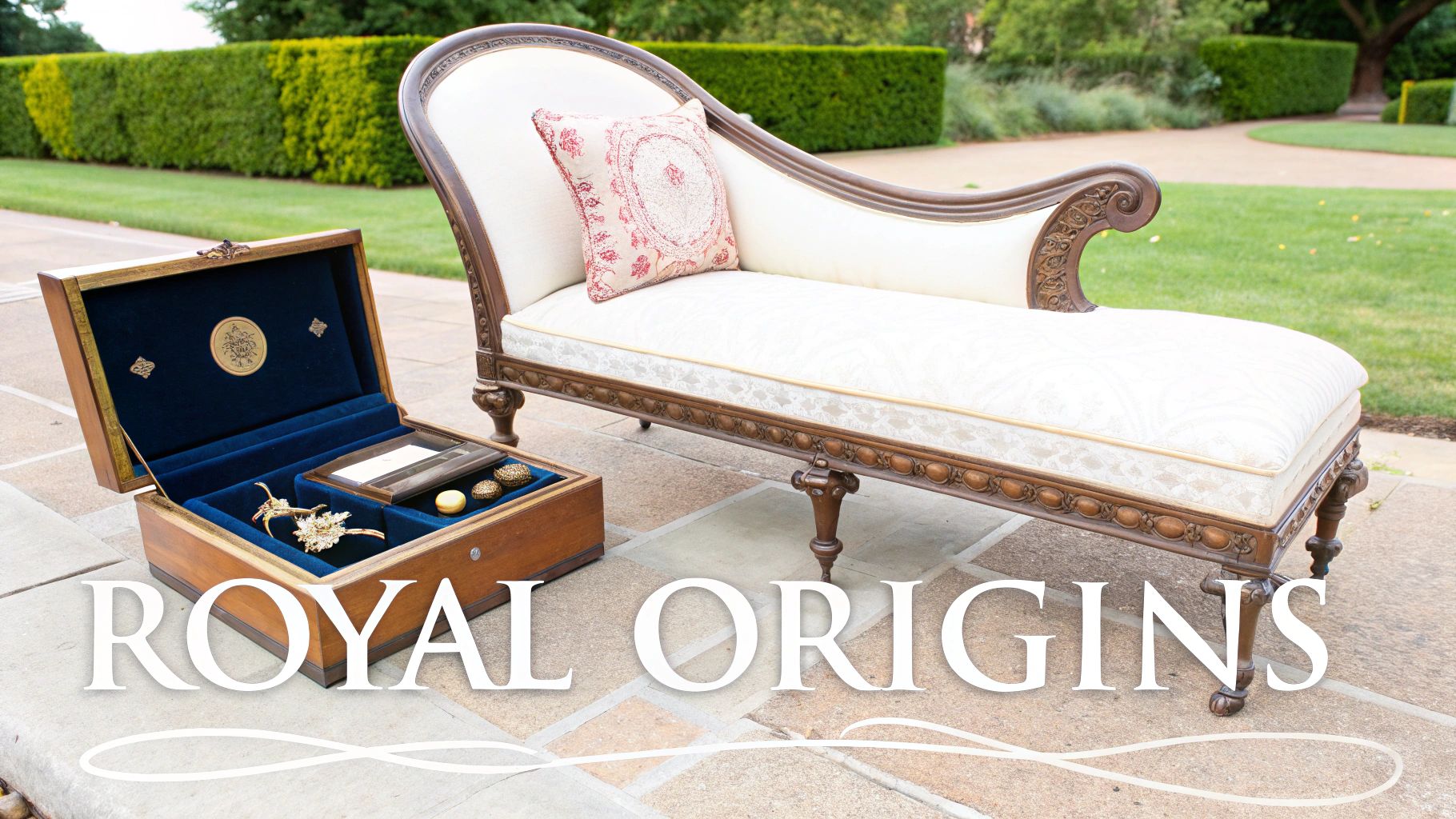
Every beautiful piece of jewelry has a story, and gold vermeil's tale starts in the lavish halls of 18th-century France. Picture a time of incredible artistry and a real hunger for luxury. The problem? Solid gold was so expensive that only the absolute wealthiest royals could afford it.
This very problem drove French artisans to get creative. They came up with a brilliant technique to fuse a thick, durable layer of gold onto a base of solid sterling silver. The result was stunning—pieces that had the heft, feel, and regal look of solid gold, but for a much more attainable price. This method, originally a closely guarded secret, was called vermeil.
Gold vermeil, pronounced 'ver-may,' traces its elegant roots back to the 18th century in France, where innovative goldsmiths first perfected the art of coating sterling silver with a luxurious layer of gold to mimic the opulence of solid gold without the exorbitant price tag. You can learn more about how this evolution democratized luxury at GoldGuys.com.
What began as a clever workaround for the French court soon caught on, spreading across Europe and eventually the entire world. It wasn't long before vermeil earned a reputation for quality and beauty, becoming the material of choice for everything from royal silverware to official state gifts.
From Royal Courts to Modern Classics
That legacy is still going strong today, which really speaks to vermeil's timeless appeal. Its journey from palace workshops to modern-day jewelry boxes is a story about one thing: making high-quality, beautiful design accessible to more people. You might be surprised where this historic technique pops up.
- Olympic Medals: Think those Olympic gold medals are solid gold? Think again. They're actually a modern version of vermeil—a sterling silver medal plated with at least 6 grams of pure gold.
- Crown Jewels: Many famous historical collections, including some of the British Crown Jewels, contain vermeil pieces. It’s a testament to how long it's been accepted as a truly precious material.
This appreciation for beautiful metalwork isn't just a European thing, either. If you look at traditions like the Japanese art of Kintsugi, or 'golden repair', you see how different cultures have found unique ways to celebrate gold.
So, when you choose a gold vermeil piece today, you're not just buying a pretty accessory. You're becoming part of a centuries-old tradition of smart luxury and incredible craftsmanship that has made beauty and elegance a reality for generations.
Vermeil Vs. Plated Vs. Filled Vs. Solid Gold
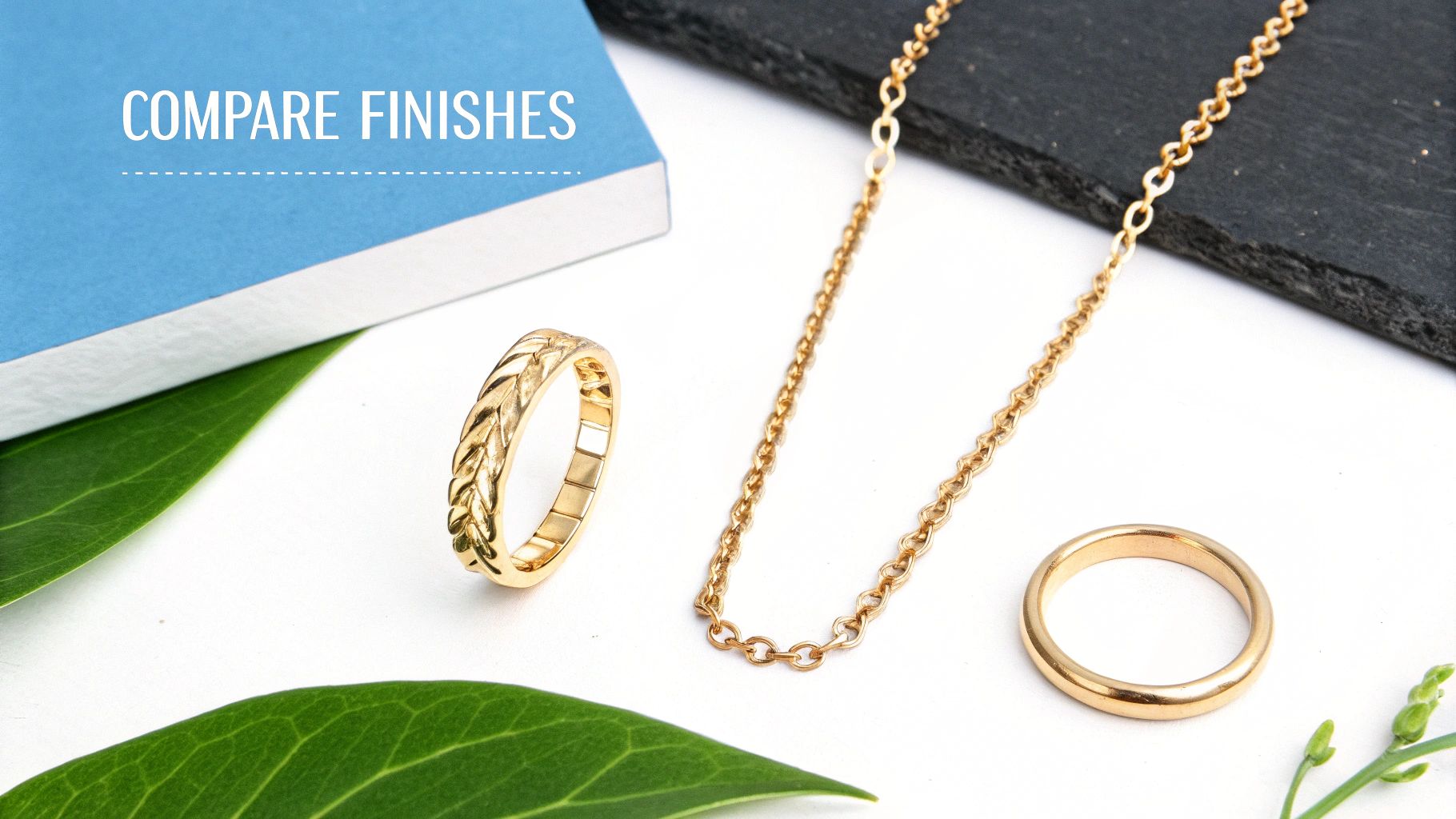
Trying to understand the world of gold jewelry can feel a lot like learning a new language. You hear terms like plated, filled, and vermeil thrown around, but what do they really mean? They sound similar, but they actually point to wildly different levels of quality, durability, and value.
Getting a handle on these differences is the secret to picking jewelry that not only looks great but also fits your lifestyle and your wallet. Let's clear up the confusion.
H3: Gold-Plated Jewelry: The Entry Point
Gold-plated jewelry is your most budget-friendly option. Think of it as a whisper of gold—a microscopically thin layer, often less than 0.5 microns thick, that’s electroplated onto a less expensive base metal like brass or copper.
This makes it fantastic for trendy, fashion-forward pieces you might only wear for a season or two. But because that gold layer is so delicate, it can rub off pretty quickly, especially when it comes into contact with lotions, water, or just everyday friction. Once it wears away, the base metal underneath is exposed, which can sometimes cause skin irritation if you're sensitive to nickel or other alloys.
H3: Gold-Filled Jewelry: A Big Step Up In Durability
Gold-filled jewelry is made in a completely different way. Instead of a thin plating, it involves pressure-bonding a much thicker sheet of gold to a brass core. To legally be called "gold-filled" in the U.S., the gold must make up at least 5% of the item's total weight.
This process results in a far more durable piece that can handle daily wear much better than gold-plated items. It’s a solid mid-range choice, but it's important to know that the gold layer can still wear down over many years. And once the core is exposed, it can’t really be repaired.
H3: Solid Gold: The Ultimate Investment
When you think of heirloom-quality fine jewelry, you’re thinking of solid gold. It’s the real deal. Made from an alloy of pure gold and other metals for strength (that’s what the karat, like 14k or 18k, tells you), a solid gold piece is precious metal through and through.
It will never tarnish, fade, or have another color show through. It’s built to last a lifetime and beyond, making it the top choice for special pieces like wedding bands and milestone gifts. While it’s the most expensive option, its permanence and inherent value make it a true investment.
To make things even clearer, here’s a quick cheat sheet comparing all four types side-by-side.
Comparing Gold Jewelry Types
| Characteristic | Gold Vermeil | Gold-Plated | Gold-Filled | Solid Gold |
|---|---|---|---|---|
| Base Metal | Sterling Silver (.925) | Brass, Copper, or Zinc | Brass or Copper | Gold Alloy (No base) |
| Gold Layer | Thick (2.5+ microns) | Very Thin (<0.5 microns) | Thick (5% of weight) | N/A (Solid throughout) |
| Durability | Good-Excellent | Low | Very Good | The Best (Lifetime) |
| Hypoallergenic | Yes | No (Base may irritate) | Generally Yes | Yes |
| Value & Cost | Mid-Range | Low | Mid-to-High | Highest |
This table really shows how each type offers a different balance of cost, quality, and longevity.
So, where does gold vermeil fit into all of this? It beautifully bridges the gap. You get the precious feel of a sterling silver base and a heavy layer of real gold, offering a touch of luxury that’s more accessible than solid gold.
For a closer look at how it stacks up against basic plating, check out our guide on the differences between gold vermeil vs. gold-plated jewelry.
How to Care for Your Gold Vermeil Jewelry
Gold vermeil is built to last, but like any beautiful thing, a little bit of care goes a long way in keeping that gorgeous shine. Don’t worry, this isn’t about some complicated, time-consuming routine. It’s really just about building a few simple habits.
The best way to think about it is that the gold layer is like a strong, protective shield. Your main job is just to protect that shield from things that could wear it down, and your favorite pieces will stay brilliant for years to come.
The golden rule? Your jewelry should be the very last thing you put on and the first thing you take off. Think of it as the finishing touch to your look. Lotions, perfumes, hairspray, and makeup all contain chemicals and oils that can be surprisingly tough on that gold layer, dulling its luster over time.
Pro Tip: Get into the habit of taking your jewelry off as soon as you walk in the door. It’s a tiny change that dramatically cuts down on accidental bumps, snags, and exposure to sweat and oils, keeping your pieces looking brand new.
Water is also not your vermeil’s best friend. Always take off your rings and bracelets before washing your hands, hopping in the shower, or going for a swim. Chlorine in pools is a definite no-go, and even the minerals in tap water can be abrasive to that delicate gold surface.
Cleaning and Storing Your Pieces
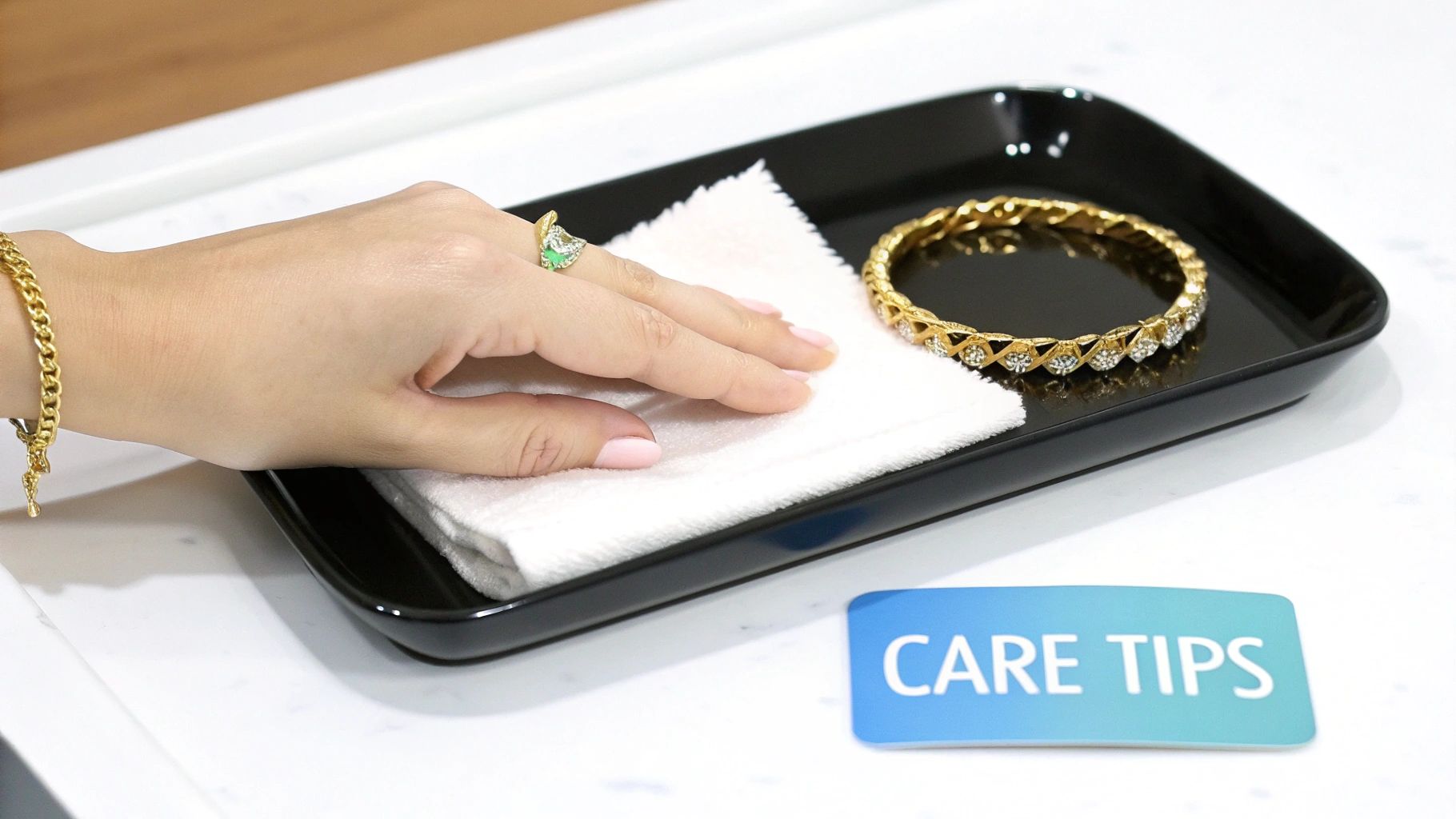
Keeping your gold vermeil sparkling is incredibly easy. All it takes is a gentle wipe-down with a soft, dry, lint-free cloth after you wear it. A simple microfiber cloth or a dedicated jewelry cloth is perfect for this. This quick step removes the day’s buildup of natural skin oils and residue.
For a slightly deeper clean, you can use a bit of lukewarm water with a tiny drop of mild, phosphate-free soap. But that’s it! Steer clear of harsh chemical cleaners, abrasive polishing cloths, and definitely avoid ultrasonic cleaners—they are far too aggressive and can easily strip the gold right off. For a full rundown of safe techniques, check out our guide on how to clean gold jewelry at home.
How you store your jewelry is just as important as how you clean it. To keep scratches at bay and prevent tarnishing, the key is to store each piece separately.
- Use Soft Pouches: The soft pouch or box your jewelry came in is its best home.
- Avoid Tangling: Don’t just toss everything into a jewelry box together. Necklaces and bracelets, in particular, can get tangled and scratch each other up.
- Keep It Cool and Dry: Find a spot away from direct sunlight and humidity (so the bathroom is out!). This helps slow down the natural oxidation process.
Just follow these simple steps, and you’ll ensure your cherished gold vermeil pieces remain a stunning part of your collection for a very long time.
How to Spot Real Gold Vermeil
When you’re buying jewelry, you want to know you’re getting the real deal. It’s no different with gold vermeil. Think of yourself as a jewelry detective—the clues are all there, you just need to know what to look for.
The first and most important clue is the hallmark. Because true gold vermeil must have a sterling silver core, it needs to have a stamp to prove it.
Look for a tiny "925" stamped somewhere inconspicuous, like on the clasp or the inside of a band. This stamp is your guarantee that the piece is made from 92.5% pure silver. Sometimes you might see "Sterling" or "Ster" instead, which means the same thing. No stamp? It's not vermeil.
Look for Honesty from the Jeweler
Beyond the physical stamp, pay close attention to how the seller describes the piece. A reputable jeweler will be proud to call their work gold vermeil and will give you all the details.
They should clearly list the gold karat (like 14k or 18k) and the exact thickness of the gold layer, usually in microns. This transparency is a huge green light.
On the other hand, be cautious with vague terms like "gold plated" or "gold finish." That kind of language often hides a cheaper base metal and a much thinner layer of gold. Knowing the difference is key to being a savvy buyer, and you can learn more about the specifics of 14k gold plated vs solid gold jewelry to really sharpen your skills.
The price tag can also tell you a lot. Sterling silver and a thick coating of real gold simply cost more than brass and a flash of plating. If you see a price that seems too good to be true, it probably is.
Ultimately, trust your gut and the jeweler's reputation. Stick with brands that are open and honest about what goes into their work. When you choose a transparent seller, you can feel confident that you’re bringing home a beautiful, high-quality piece that’s truly built to last.
So, Is Gold Vermeil a Good Choice?
When you’re picking out a new piece of jewelry, you’re doing more than just choosing something pretty. You’re making a deliberate choice. With gold vermeil, you’re not just getting a beautiful accessory; you're getting a piece that hits that sweet spot between luxury, durability, and smart design.
It’s the little things that make vermeil feel so special. That thick layer of real gold gives it the same warm, radiant glow you’d expect from a solid gold piece. It looks and feels like a luxury item because, well, it is.
More Than Just a Pretty Face
Underneath that gleaming gold surface is a core of solid sterling silver. This tag team of precious metals is precisely what makes vermeil such a brilliant and long-lasting option. The sterling silver base is hypoallergenic, making it a safe bet for sensitive skin, while the heavy gold plating is built for the real world.
What does that mean for you? You can actually wear and enjoy your favorite pieces every day. You don't have to constantly stress about the color rubbing off or tarnishing, which is a common headache with standard gold-plated jewelry. Vermeil is made to be lived in, not just tucked away in a box.
Gold vermeil truly offers the best of both worlds: the high-end look of solid gold and the trusted, quality feel of sterling silver. It’s affordable luxury, plain and simple. It lets you own something genuinely special without having to make any compromises.
This unique combo is also what makes vermeil such a thoughtful gift. When you give someone a piece of gold vermeil, you're telling them you care about both beauty and quality that lasts. It's a token of genuine appreciation, a keepsake they can treasure for years.
The Smart and Sustainable Pick
Choosing vermeil is also a more conscious decision. Because it’s built to last, it won’t be tossed aside after one season like so many fast-fashion accessories. This makes it a far more sustainable choice, as you're investing in an item with real value and a much longer life cycle.
So, whether you're celebrating yourself or looking for that perfect gift, gold vermeil really stands out. It shows a commitment to quality and a real appreciation for good craftsmanship. It’s more than just jewelry—it’s a beautiful, durable reminder of a person, a feeling, or a moment, designed to keep on shining.
Common Questions About Gold Vermeil
Even after getting the full picture of what makes gold vermeil so special, a few questions always seem to come up. Let's walk through the most common ones so you can feel completely confident about choosing this beautiful and durable jewelry.
Is Gold Vermeil Real Gold?
Yes, it absolutely is. The entire outer layer of any gold vermeil piece is real gold, usually 14k or 18k. We're not talking about gold-colored paint or some imitation material here.
The key difference is that this genuine layer of gold is electroplated over a solid sterling silver core. This process gives it that luxurious finish you love, backed by the intrinsic value of two precious metals. It's the strict standards—a thick gold layer over a precious silver base—that truly set it apart from standard plating.
Can I Wear Gold Vermeil Every Day?
Gold vermeil is a fantastic choice for your daily jewelry lineup. Its hefty gold layer—a minimum of 2.5 microns thick—and solid sterling silver foundation make it far tougher than typical fashion jewelry that can start fading after just a few wears.
To keep it looking brand new for years, a little TLC goes a long way. Just get into the habit of taking it off before you shower, swim, or put on lotions. This simple step protects it from harsh chemicals and moisture, ensuring you get the most out of your beautiful pieces.
Is Gold Vermeil Hypoallergenic?
For the vast majority of people, yes! The base metal is required to be sterling silver, which is 92.5% pure silver and widely considered a hypoallergenic precious metal. This makes it a much safer bet for sensitive skin compared to costume jewelry, which often relies on nickel, brass, or other common irritants that can cause a reaction.
The one-two punch of a sterling silver core and a thick, real gold coating creates two layers of protection, making vermeil a go-to for anyone prone to skin irritation.
How Is It Different From Gold-Filled Jewelry?
This is a great question, and it really comes down to how they're made. Gold vermeil is created by electroplating a thick layer of gold onto a sterling silver core. Gold-filled jewelry, on the other hand, is made by mechanically bonding a sheet of gold to a different base metal, which is almost always brass.
While both are quality options, only gold vermeil is legally required to use a precious metal like sterling silver for its foundation. This ensures the entire piece, from the inside out, is made from valuable, hypoallergenic materials. Even if the gold layer eventually wears, the silver underneath won't tarnish as quickly or dramatically as brass. If you want to dive deeper, you can check out our guide on whether gold jewelry tarnishes.
At Molenia Jewelry, we believe in creating pieces that carry meaning and are designed to last. Our thoughtfully crafted gold vermeil jewelry turns your emotions into timeless keepsakes.
Explore our collection and find a piece that tells your story.


