

Moissanite vs Diamond Sparkle A Complete Guide
When you're trying to decide between a moissanite and a diamond, the conversation almost always turns to one thing: sparkle. But here's the secret—it’s not about which one sparkles more, but how they sparkle. Each stone has its own distinct personality.
Moissanite throws off fiery, rainbow-like flashes, a look so vibrant it's often called the "disco-ball effect." On the other hand, a diamond offers that classic, elegant sparkle—a beautiful balance of brilliant white light mixed with more subtle hints of color. It really comes down to your personal taste. Are you looking for a show-stopping, colorful fire or a timeless, sophisticated gleam?
The Heart of the Sparkle Debate
So, which one wins the sparkle contest? Honestly, there's no winner. It’s a matter of preference, not a question of which is "better." A moissanite’s intense, colorful fire is its signature, while a diamond’s balanced brilliance is what has made it a classic for centuries. They’re just different.
This visual really helps put the key differences into perspective, especially when you factor in how a moissanite's high refractive index and lower cost come together.
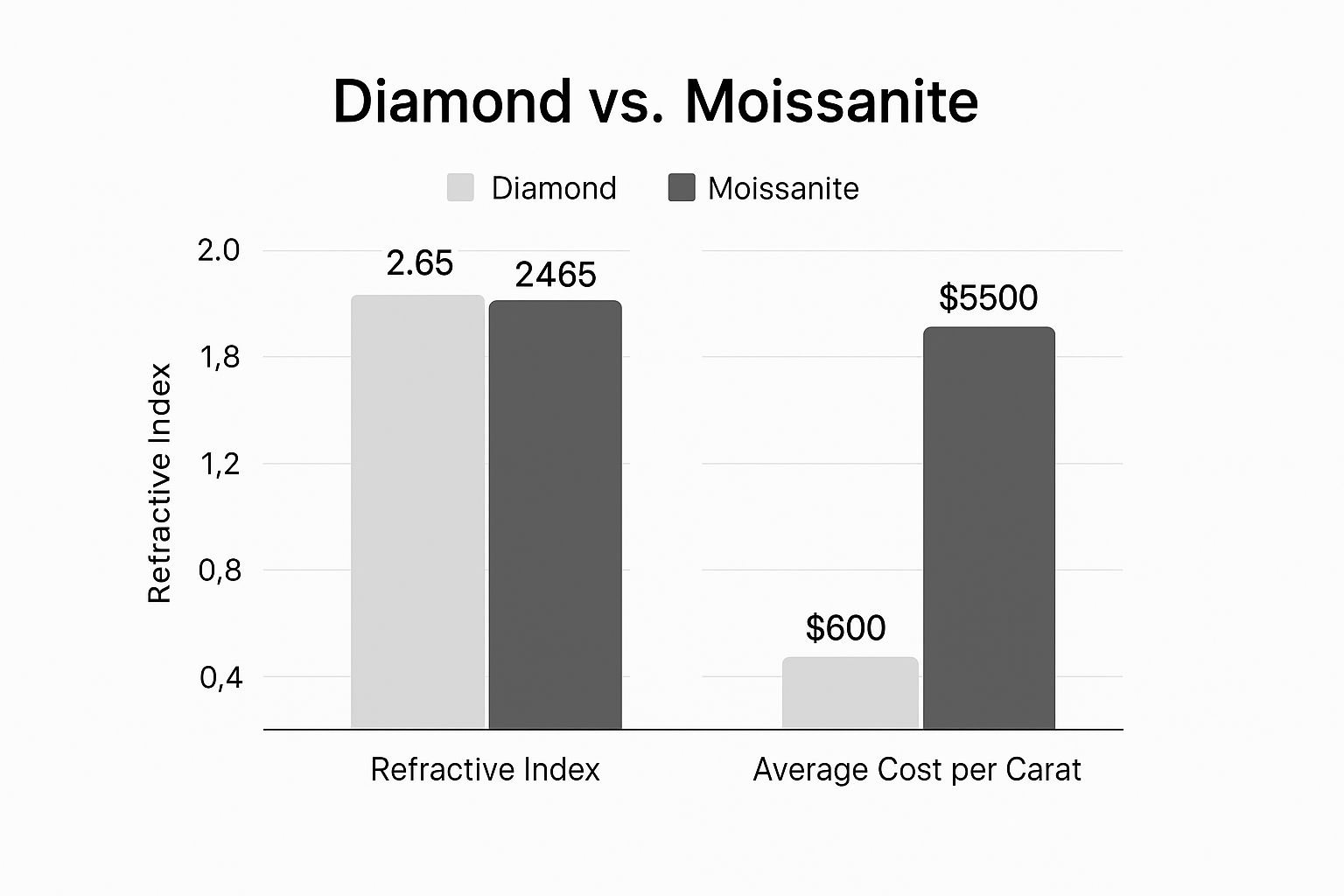
As you can see, a moissanite is engineered to bend more light, which is what creates that incredible fire. And it does this at a price point that makes it a fantastic value.
The Bottom Line: When it comes to the "moissanite vs. diamond sparkle" debate, it's all about your style. If you love a bold, rainbow flash that catches every eye in the room, go for moissanite. If you prefer a timeless, crisp white sparkle, a diamond is your stone.
For anyone captivated by the unique fire of moissanite, it's worth exploring how designers are using its properties in modern jewelry. If you want to dive deeper, this Molenia moissanite knowledge guide does a great job of breaking down exactly what makes this gemstone so captivating.
At a Glance: How Moissanite and Diamond Sparkle Differ
To see how these differences play out, let's look at the specific optical properties that create each stone's signature sparkle. This table gives you a quick, side-by-side breakdown.
| Optical Property | Moissanite | Diamond |
|---|---|---|
| Brilliance (White Light) | Excellent, very bright | Exceptional, crisp |
| Fire (Color Flashes) | Intense rainbow flashes | Subtle, balanced fire |
| Refractive Index | 2.65–2.69 | 2.42 |
| Best For | Bold, eye-catching sparkle | Classic, understated elegance |
Ultimately, both moissanite and diamond are stunning choices. The best one for you is simply the one whose sparkle speaks to you the most.
Understanding How Gemstones Create Sparkle
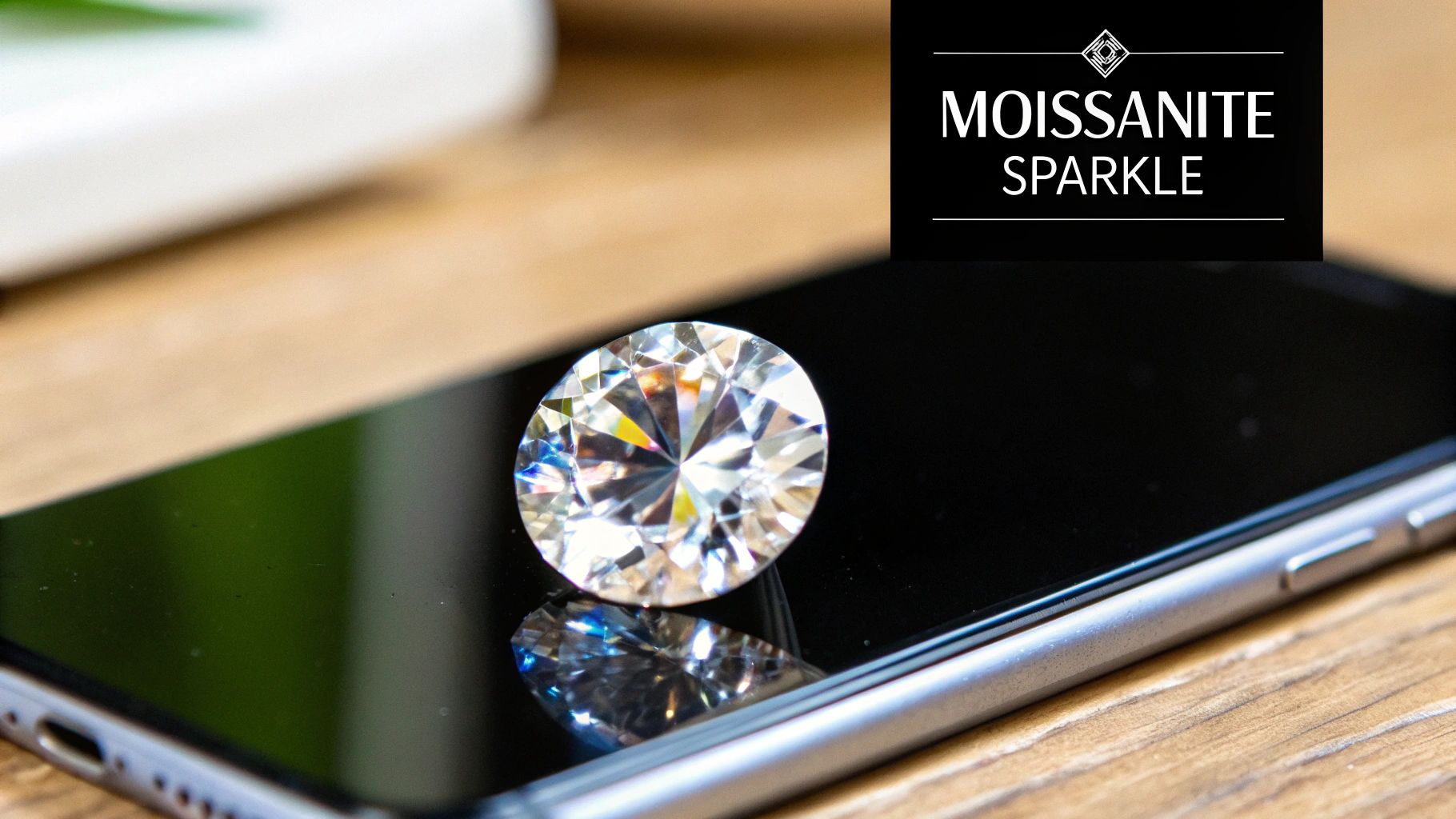
Before we can really get into the nitty-gritty of moissanite versus diamond, we need to talk about what "sparkle" actually is. It’s a word we throw around a lot, but it's not just a single quality. The dazzling light show you see from a well-cut stone is actually a team effort between three different optical effects.
When light hits a gemstone, the way it bounces around inside and comes back out creates a unique visual signature. Getting a handle on these elements is key to seeing past the marketing hype and figuring out which stone’s look truly speaks to you.
The Three Elements of Sparkle
It all comes down to how a stone plays with light. Here’s a simple breakdown of the three components that make up that beautiful sparkle:
-
Brilliance: Think of this as pure, bright, white light. It's the light that enters the stone and is reflected straight back to your eye, creating a crisp, white shine.
-
Fire: This is where the color comes from. When a stone acts like a prism, it splits white light into a rainbow of spectral colors. Those stunning flashes of red, blue, and green? That's fire.
-
Scintillation: This is the dynamic part of the sparkle—the "twinkle." It’s the pattern of light and dark areas that you see as you, the stone, or the light source moves. It adds life and movement to the gem.
Here's where it gets interesting from a technical standpoint. Moissanite has a refractive index of 2.65, which is higher than a diamond's 2.42. This is a big reason why moissanite often exhibits about 10-15% more brilliance. Its dispersion rating (the fire) is also more than double that of a diamond, which is why it throws off such intense rainbow flashes. You can dive deeper into these gemological differences if you're curious.
The Fiery Rainbow Sparkle of Moissanite
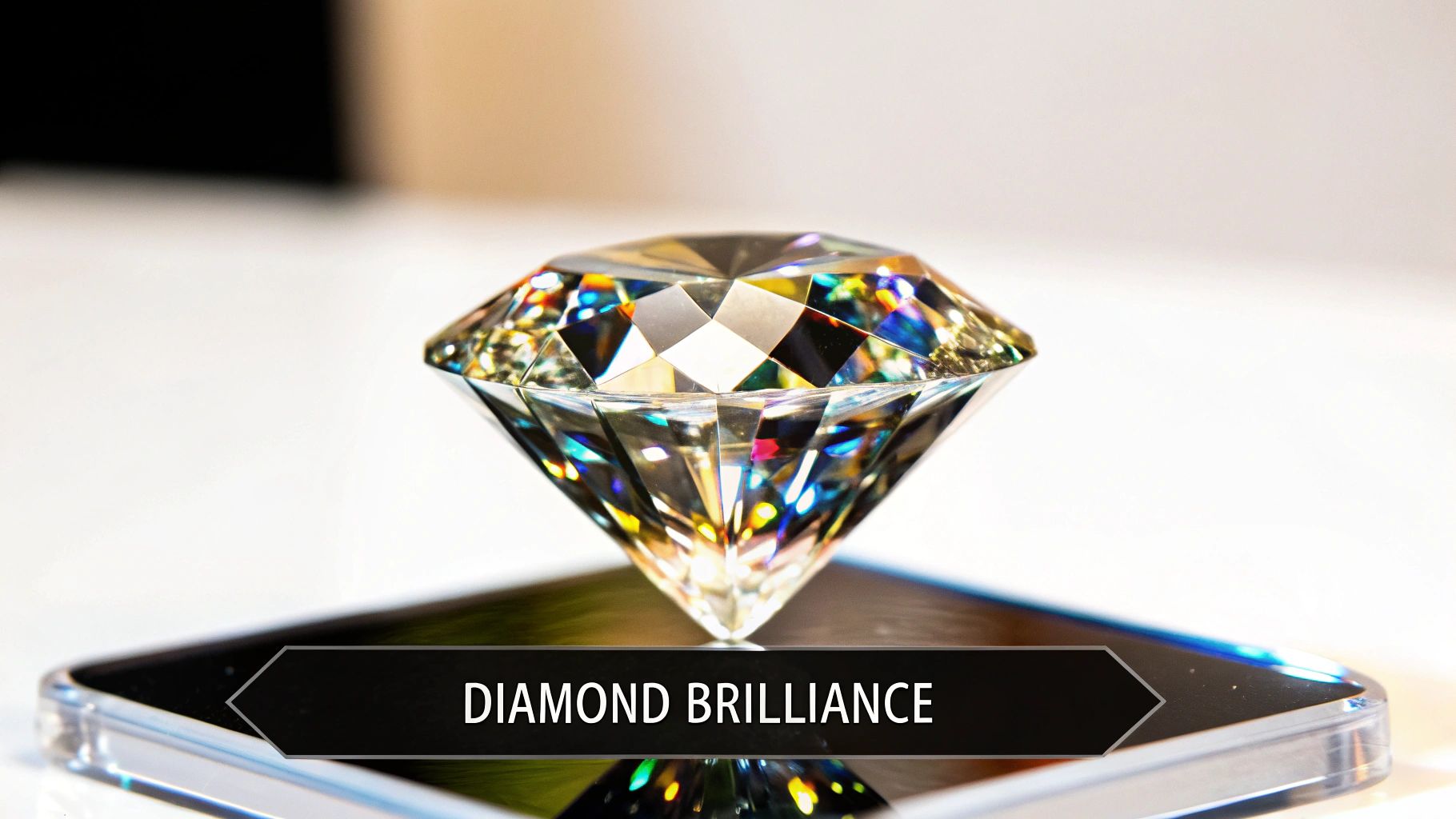
When you think of moissanite, think of intense, colorful fire. This gemstone is an absolute powerhouse when it comes to dispersion—the technical term for how a stone breaks down light into a brilliant rainbow. The result is a vibrant, unmistakable "disco ball" effect that really catches the eye.
This dramatic play of color is most obvious in direct light. Step out into the sun or under a spotlight, and the stone practically explodes with color. These aren't just subtle glints; they are bold, fiery flashes that dance with every single movement.
Who Loves This Type of Sparkle
Ultimately, the choice between moissanite and diamond sparkle boils down to personal style. Moissanite's over-the-top fire is perfect for anyone who wants a statement piece that truly dazzles. It’s for the person who loves maximum sparkle and a captivating display of color that demands attention.
Because of its unique optical properties, jewelers cut moissanite specifically to amplify this fire. This creates a look that's both full of life and completely mesmerizing—a signature quality that people actively seek out for its show-stopping brilliance.
You can see how this fiery effect is brought to life in beautifully made pieces by exploring collections like Molenia moissanite jewelry. The designs are often crafted to showcase that stunning rainbow sparkle to its fullest potential.
The Classic, Balanced Sparkle of a Diamond
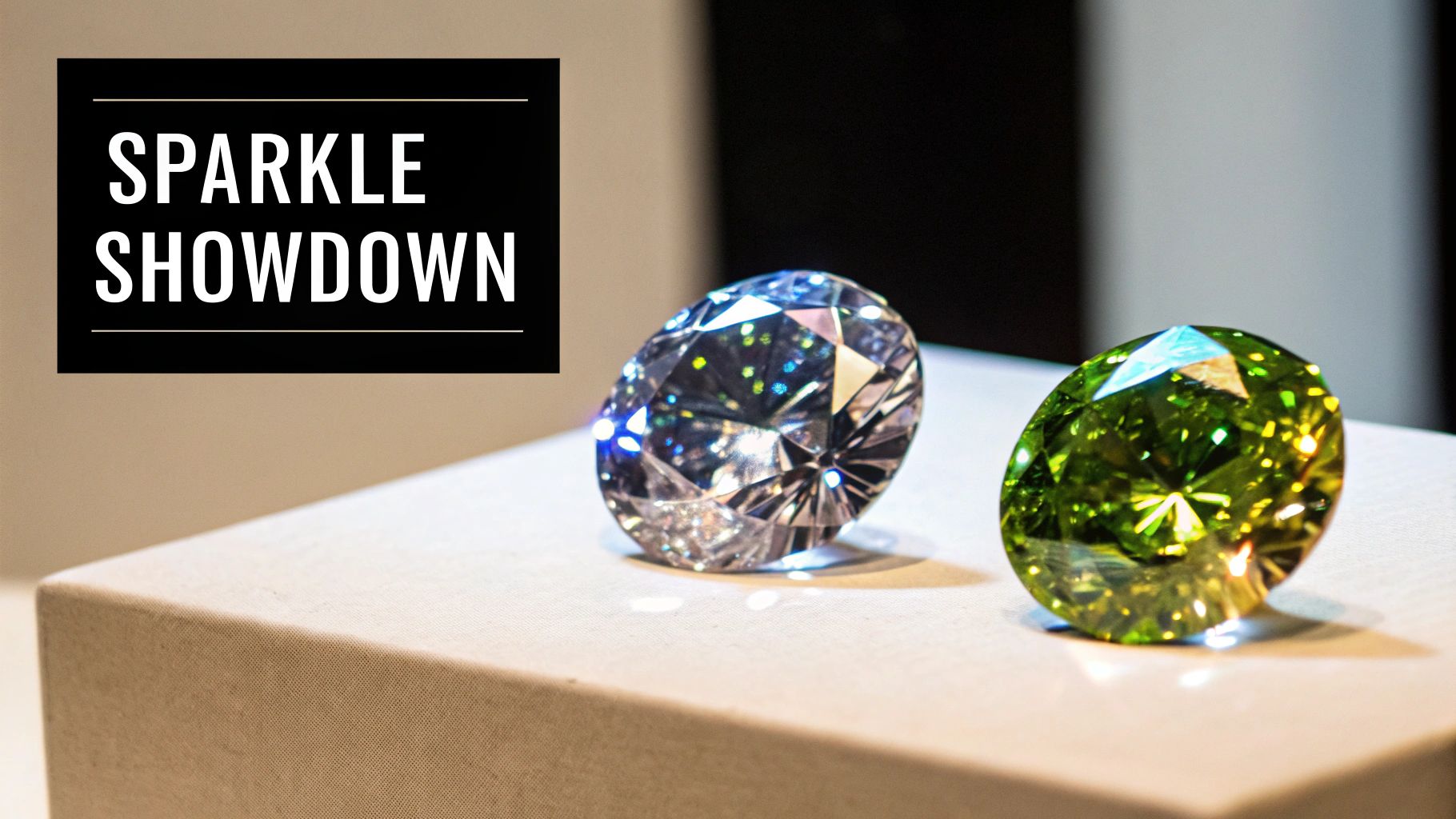
When we talk about sparkle, diamonds offer that timeless, iconic look everyone recognizes. Their beauty isn't about throwing wild, fiery colors. Instead, it’s all about a sophisticated balance between bright, white light (brilliance) and subtle, colorful flashes (fire). This creates a look that feels deep, elegant, and powerfully understated.
Unlike the fiery rainbow effect you see in moissanite, a diamond’s sparkle is much more controlled. It’s fantastic at grabbing any available light and bouncing it right back, which is why it shines so beautifully even in low-light situations where other gems can look a bit dull. This consistent brightness is a huge part of its classic appeal.
Who Prefers This Classic Brilliance?
Someone who chooses a diamond is often drawn to tradition and a specific kind of refined elegance. They’re looking for a sparkle that’s both brilliant and graceful—a bright, clean aesthetic that has been treasured for generations. It’s the perfect choice for anyone who believes a true classic never fades.
A diamond’s unique crystal structure is what gives it such mastery over light, producing that signature crispness. Its reliable performance in all kinds of lighting makes it an endlessly brilliant choice for a ring you’ll wear every day.
This balanced beauty is identical in both natural and lab-grown diamonds, since they share the same optical properties. If you're curious about those options, you can explore the lab-grown and mined diamonds in our guide.
Why the Cut Dictates the Sparkle
Forget everything else for a moment. When it comes to how much a stone sparkles, the cut is king. It’s the single most important factor, hands down.
You can think of a gem cutter like a sculptor, but instead of clay or marble, their medium is light itself. Their job is to painstakingly shape the stone with dozens of tiny, precise facets. Each angle has a purpose: to catch incoming light, bounce it around inside, and shoot it straight back out to your eye as a brilliant flash.
A well-cut stone, whether it's a moissanite or a diamond, will always outshine a poorly cut one. The difference isn't subtle; it's night and day. A premium cut can unlock a diamond's icy-white brilliance or turn a moissanite’s signature rainbow fire into a full-blown disco ball. This is where the magic really happens.
How Different Cuts Create Different Sparkles
Cutters use different styles to bring out a stone's best features. This is great news for you, because it means you can actually choose the type of sparkle you want.
- Round Brilliant Cut: This is the undisputed champion of sparkle. With its 58 perfectly placed facets, it was literally designed to produce the most brilliance and fire possible. It’s a classic for a reason and looks stunning in both moissanite and diamond.
- Elongated Cuts (Oval, Emerald): These elegant shapes create what’s often called a “hall of mirrors” effect. In a diamond, this produces long, sophisticated flashes of white light. In a moissanite, it stretches out those colorful rainbow sparks across a larger canvas, creating a unique and mesmerizing look.
Here’s the bottom line: The type of stone determines its potential for sparkle, but the quality of the cut decides how much of that potential you actually get to see. Investing in an excellent cut is the smartest move you can make.
If you want to see what master-level cutting can do, take a look at the pieces in the Molenia jewelry collection. Each one is crafted to push the stone’s brilliance to its absolute limit.
Choosing Your Stone Beyond Its Sparkle
While the way a stone sparkles is what first catches your eye, the final decision usually comes down to more practical things. When you're weighing moissanite against a diamond, factors like price, durability, and ethics are just as crucial as the sparkle itself.
Cost is often the most significant difference. Moissanite gives you the look and feel of a large, brilliant gemstone for a fraction of what a comparable diamond would cost. This makes it a fantastic choice if you're working with a specific budget but don't want to compromise on size. It opens up possibilities for some truly stunning designs, like those in Molenia's gemstone jewelry collection, without the hefty price tag.
Durability and Ethical Peace of Mind
You can rest easy knowing both stones are incredibly tough and built for everyday life. A diamond is famous for being a perfect 10 on the Mohs scale of hardness—it’s the hardest mineral we know of.
Moissanite isn't far behind, coming in at a very respectable 9.25. This means it’s highly resistant to the scratches and scuffs that come with daily wear.
A moissanite's higher refractive index (2.65-2.69 vs. diamond's 2.42) and superior dispersion give it more than twice the fire of a diamond, creating its signature rainbow sparkle. Explore more about these optical properties.
Finally, there’s the ethical consideration. Because all moissanite used in jewelry today is created in a lab, it comes with a guarantee. You know it’s 100% conflict-free and a more environmentally sustainable choice, which for many people, offers invaluable peace of mind.
Frequently Asked Questions About Sparkle
Let's tackle some of the most common questions people have when they're trying to understand the sparkle of moissanite versus a diamond.
Can People Tell Moissanite and Diamond Apart by Sparkle?
For a trained gemologist looking closely, the differences can be spotted. But to the average person? They'll just see a stunning, brilliant gem. The most telling characteristic of moissanite is its fiery, rainbow-like sparkle, which really comes alive in bright, direct light.
Ultimately, this isn't about one stone masquerading as another. It’s about choosing the kind of sparkle you personally love—the vibrant, colorful flashes of moissanite or the timeless, balanced brilliance of a diamond.
Does Moissanite Sparkle Fade Over Time?
Not a chance. A moissanite's sparkle comes from its inherent optical properties, which are a permanent part of the stone's physical structure. Thanks to its incredible hardness, it will never get cloudy, dull, or lose that famous fire.
Of course, just like any gemstone you wear daily, it will pick up dirt and oil, which can temporarily dim its shine. But as we explain in our guide on how to clean moissanite jewelry at home, a quick, simple cleaning is all it takes to bring back its magnificent sparkle instantly.
Which Stone Sparkles More in Low Light?
In low-light situations, diamonds generally have a slight advantage. Their crystal structure is fantastic at gathering whatever ambient light is available and reflecting it back to the eye. This helps them keep a crisp, bright look even when the lights are low.
Key Takeaway: Moissanite's sparkle is at its most dramatic and fiery in bright, direct light like sunlight or spotlights. A diamond, on the other hand, provides a more consistent, classic sparkle across all lighting conditions.
Ready to experience the breathtaking fire of moissanite for yourself? Explore the curated collections at Molenia Jewelry and find the perfect piece that speaks to your style. Discover our commitment to ethical luxury and brilliant design at Molenia Jewelry.