

How to Prevent Silver from Tarnishing
The best way to keep your silver looking brilliant is to get ahead of the tarnish. It all comes down to managing its environment—you want to limit its exposure to air and moisture and steer clear of anything with sulfur. Think sweat, lotions, and even some perfumes. Your best line of defense is simply storing it properly in an airtight container.
Why Does My Silver Tarnish in the First Place?
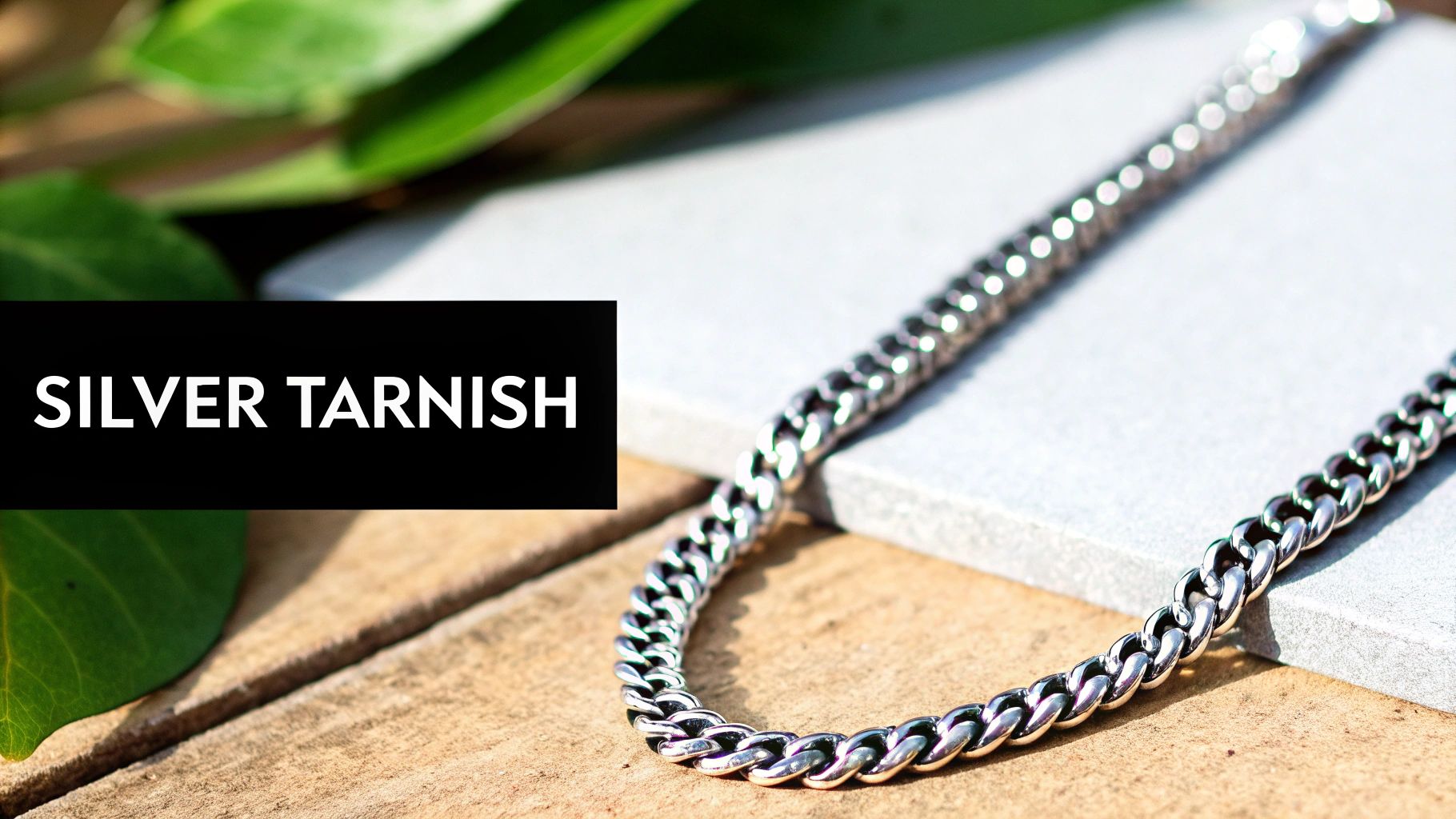
Have you ever pulled out a favorite silver necklace only to find it looking dull and dark? It's a frustrating moment, but it’s not a sign of poor quality—it's just science.
Tarnish is simply a natural chemical reaction. When silver comes into contact with sulfur compounds floating around in the air, a thin, dark layer of silver sulfide forms on the surface. Things like humidity, sweat, and the chemicals in our everyday cosmetics can speed this process up.
This is especially true for sterling silver. Since it's 92.5% silver mixed with other metals to make it stronger, it’s actually more likely to tarnish. Knowing what causes it is the first real step in winning the battle against that pesky discoloration.
If you want to get into the nitty-gritty, we have a whole guide on how to care for sterling silver that breaks it down even further.
Interestingly, the pros have a high-tech way of dealing with this. Professional conservators often use a process called electrochemical reduction, which can reverse the tarnish and remove up to 95% of it by converting that silver sulfide back into pure, shiny silver. The Canadian Conservation Institute's findings offer a fascinating look into these advanced techniques.
Simple Habits to Keep Your Silver Sparkling
If you think keeping silver brilliant requires endless polishing, I've got some good news. The real secret is prevention, and it all comes down to a few small, consistent habits that make a world of difference.
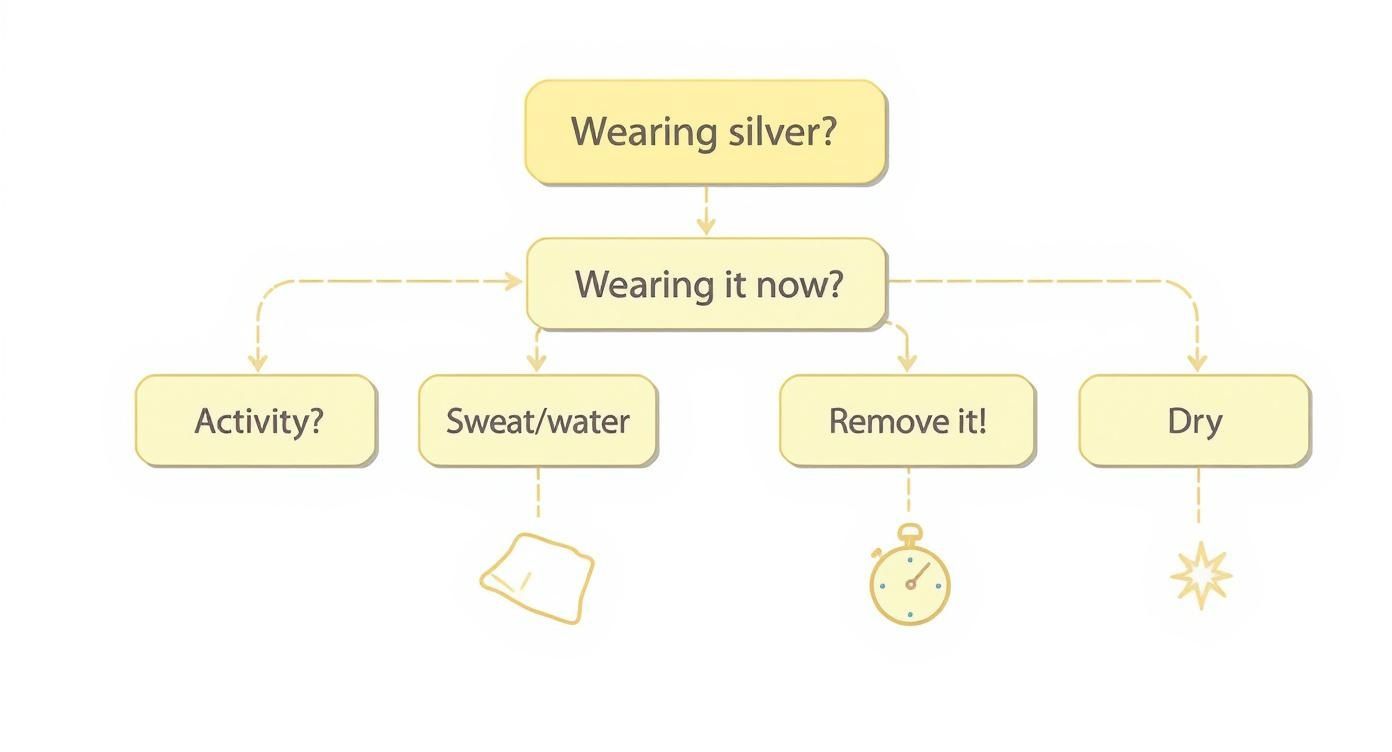
Think of it as the 'last on, first off' rule. Your jewelry should be the final touch after you've applied all your lotions, makeup, hairspray, and perfume. At the end of the day, it's the very first thing you take off. This one simple habit dramatically cuts down on your silver's exposure to chemicals that cause tarnish.
You’ll also want to make sure your silver comes off before you hop in the shower, jump in a pool, or hit the gym. Chlorine is notoriously harsh on sterling silver, and even your own sweat can accelerate tarnishing. Just get into the habit of giving your pieces a quick, gentle wipe with a soft cloth after wearing them to clear away any oils and moisture.
Pro Tip: Weaving these little steps into your daily routine is genuinely the easiest, most effective way to keep your jewelry looking brand new for years. If you're curious about which pieces are built to handle the hustle, check out our guide on what jewelry is best for everyday wear.
Mastering The Art Of Silver Storage
Where you keep your silver when you're not wearing it matters just as much as how you treat it during the day. I know it’s tempting to leave your favorite pieces out on a pretty jewelry stand, but that’s like rolling out the welcome mat for tarnish. The best defense is a good offense: create a little fortress against air and moisture.
Go Airtight
Your best bet is anything airtight. Think small, individual zip-top bags for each piece—just make sure to squeeze all the air out before sealing. Soft cloth pouches are also great, especially if you tuck them away inside a closed jewelry box. This isn't just folklore; science backs it up. Research has shown that storing silver in impermeable bags can slow down tarnishing by nearly 100% in various environments.
Long-Term And Travel Storage
For pieces you don't wear often, consider adding an anti-tarnish strip to the bag or container. These little strips absorb the sulfur gases in the air that cause tarnish in the first place, giving your jewelry an extra layer of protection. When you’re traveling, a dedicated, lined jewelry roll or a compartmentalized case is a lifesaver. It prevents your necklaces from tangling and your earrings from scratching each other, all while keeping them away from the open air.
For those heirloom pieces you only bring out on special occasions, it's worth looking into more robust long term storage tips to ensure they stay pristine for years.
The infographic below gives a great visual summary of these daily habits.
Choosing the right storage method really depends on your collection and how often you wear certain pieces. Here’s a quick comparison to help you decide what works best for you.
Silver Storage Solutions Comparison
| Storage Method | Tarnish Prevention Level | Best For | Pro Tip |
|---|---|---|---|
| Airtight Plastic Bags | High | Individual pieces, travel, long-term storage | Squeeze all air out before sealing. Add an anti-tarnish strip for extra protection. |
| Anti-Tarnish Cloth/Pouch | High | Delicate items, frequently worn pieces | Store pouches inside a larger, closed jewelry box to keep them dust-free. |
| Lined Jewelry Box | Medium | Everyday jewelry, organized collections | Look for boxes with treated linings specifically designed to inhibit tarnish. |
| Open Jewelry Stand/Tray | Low | Very short-term (e.g., overnight) in a dry room | Avoid this for anything you aren't wearing the next day, especially in humid areas like a bathroom. |
Ultimately, there's a solution for every need, from a simple plastic bag to a specially lined jewelry armoire.
Safe and Effective Cleaning Solutions
Even when you're super careful, a bit of tarnish or dullness is bound to happen over time. That’s perfectly normal! The key is knowing how to clean your silver without causing any harm.
For those quick, routine touch-ups, a professional silver polishing cloth is your absolute best friend. These aren't just any old rags; they're specially treated with gentle cleaning agents that lift away tarnish and bring back that brilliant shine without scratching the metal.
Going a Little Deeper
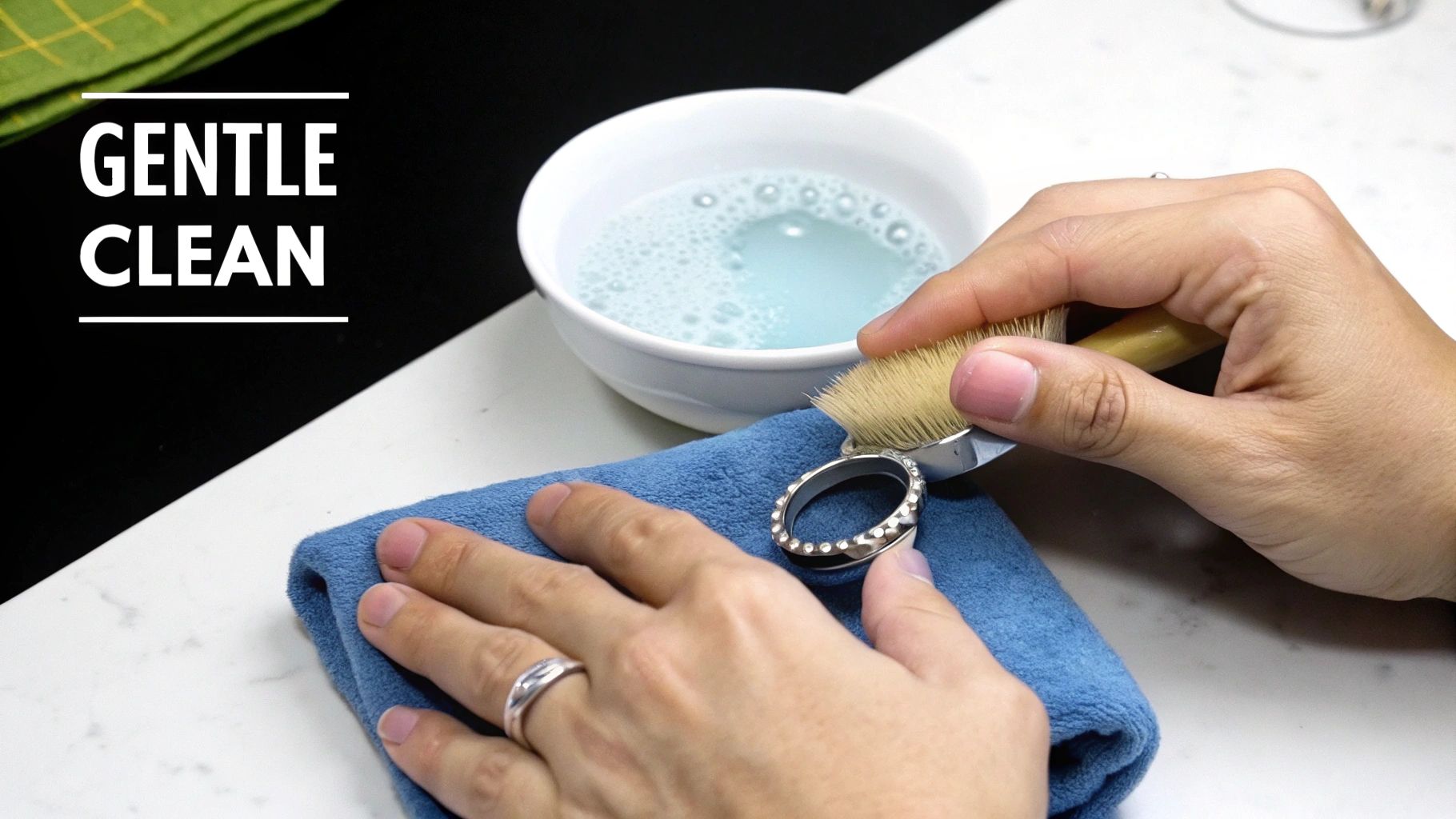
Need something with a little more oomph? You can skip the harsh, smelly commercial dips and chemicals. A simple, homemade solution of warm water mixed with a few drops of mild dish soap often does the trick beautifully. If you're curious about what makes a cleaner safe for your home and your jewelry, it's worth understanding the science behind the best non-toxic cleaning products.
Just let your pieces soak for a few minutes, then gently scrub any crevices with a soft-bristle toothbrush—an old, clean one works perfectly. Rinse everything thoroughly under cool water and, most importantly, dry it completely with a soft, lint-free cloth. This method is wonderfully gentle, making it a great choice for delicate pieces, especially those with gemstones.
A Word of Caution: Please, stay away from old wives' tales that recommend using toothpaste or baking soda pastes. These are abrasive and will leave behind tiny scratches, permanently dulling your silver's gorgeous, reflective finish.
Long-Term Protection for Treasured Pieces
When you have a truly special piece—maybe a family heirloom or something with deep sentimental value—you want to do more than just slow down tarnish. You want to stop it in its tracks.
For this level of preservation, you can turn to more advanced, professional methods. Jewelers often use clear, protective coatings or lacquers to completely seal a silver piece from the air and moisture that cause it to darken.
Think of it as an invisible shield. This barrier effectively puts the tarnishing process on pause. It's not really a practical solution for your everyday rings or bracelets, since constant wear and tear will eventually break down the coating. But for pieces that are displayed or stored away for long periods, it’s a fantastic option.
In fact, scientific studies have shown that the right coatings can cut down on darkening and surface damage by a whopping 20-40% compared to other methods, especially in high-sulfur environments. If you're curious about the data behind it, you can read the full research on protective coatings and see for yourself.
This kind of professional-grade protection is one of the best ways to safeguard your most valuable silver for future generations. For your daily-wear items, you might find our guide to non-tarnish jewelry alternatives helpful.
We Get These Questions About Silver Tarnish All The Time
Even when you're doing everything right, you'll probably still have questions about why your silver is tarnishing. It happens! Let's clear up a few of the most common issues I see.
Is It Okay to Wear My Silver Jewelry in the Shower?
I really recommend against it. While one accidental shower isn't going to destroy your favorite necklace, making it a habit is asking for trouble.
Think about it: soaps, shampoos, and conditioners are full of chemicals that can react with silver and accelerate tarnishing. On top of that, if you have hard water, it can leave a dull, scaly film from mineral deposits that’s a real pain to clean off. Just taking your pieces off before you hop in is one of the easiest, most protective habits you can build.
My Silver Tarnished Inside Its Jewelry Box—What Gives?
This is a frustratingly common one. The culprit is often the jewelry box itself. Many standard boxes are made with glues, dyes, and fabrics that slowly release sulfurous compounds over time. And sulfur is tarnish's best friend.
To keep your pieces safe, store them in individual airtight baggies or invest in a box specifically lined with an anti-tarnish fabric. It makes a world of difference.
Are Those Commercial Silver Dips a Good Idea?
Honestly, I’d steer clear. Those chemical dips are incredibly aggressive. They work by literally dissolving the top layer of silver to get rid of the tarnish.
While it might look like a quick fix, you're removing a tiny bit of your jewelry every single time. It can be especially damaging to pieces with intricate engravings or gemstones. A good quality polishing cloth is a much safer bet for the long-term health of your jewelry.
Remember, the tarnish you see on sterling silver isn't a flaw—it's just a natural reaction. Pure silver is far too soft for jewelry, so it’s mixed with other metals for strength. It's those helpful alloys that react with the air, not the silver itself!
Your jewelry tells your story, and keeping it looking beautiful is part of honoring that journey. For pieces designed with lasting quality and mindful materials, I invite you to explore the collection at Molenia Jewelry. You can find timeless, cherish-worthy designs right here: https://www.moleniajewelry.com.


